
Advanced Chemistry Studies at Ball State University
Explore the in-person advanced chemistry program at Ball State University, from research opportunities to career outcomes for master's and PhD students.

By Stacy Harper
For working professionals and recent graduates who want to deepen their expertise in the chemical sciences, the question of where to continue formal education often feels like a crossroads. You have already earned a bachelor's degree, and now you are weighing the value of a master's degree or a doctoral program against the realities of career advancement, research interests, and personal commitments. Ball State University in Muncie, Indiana, offers a distinctive answer for those who prefer the structure and engagement of in-person learning. The advanced track in Chemistry, General Beyond bachelor's degree In-person at Ball State University provides a rigorous, cohort-based environment where theoretical knowledge meets hands-on laboratory innovation. This article unpacks what makes this program a strategic choice, how it aligns with professional goals, and what prospective students should consider before applying.
Unlike online or hybrid formats, the in-person experience at Ball State creates daily opportunities for spontaneous discussions with faculty and peers. These interactions often spark research ideas and lead to mentorship relationships that extend beyond the classroom. For a discipline like chemistry, where precision and collaboration matter, being physically present in the laboratory is not just a preference; it is often a necessity. The program is designed for individuals who thrive on direct feedback, immediate access to sophisticated instrumentation, and the intellectual energy of a campus community.
The Academic Structure: From Advanced Coursework to Original Research
The curriculum for Chemistry, General Beyond bachelor's degree In-person at Ball State University is carefully scaffolded to move students from advanced foundational knowledge to independent inquiry. The program typically begins with graduate-level core courses in analytical, inorganic, organic, and physical chemistry. These courses are not merely reviews of undergraduate material. They push students to engage with current literature, design complex experiments, and interpret data through sophisticated theoretical frameworks. Small class sizes ensure that each student receives individualized attention from faculty who are active researchers in their fields.
As students progress, the focus shifts toward specialization. Ball State offers research groups in areas such as materials chemistry, chemical education, and environmental analysis. You might find yourself synthesizing novel polymers in one semester and then developing a sensor for water contaminants in the next. This flexibility allows you to tailor the degree to your career aspirations, whether those lie in industry, government, or academia. The culmination of the program is a thesis or dissertation that contributes new knowledge to the field. This process is guided by a faculty committee, but the ownership of the project rests with you. It is an intense, rewarding experience that builds resilience and intellectual independence.
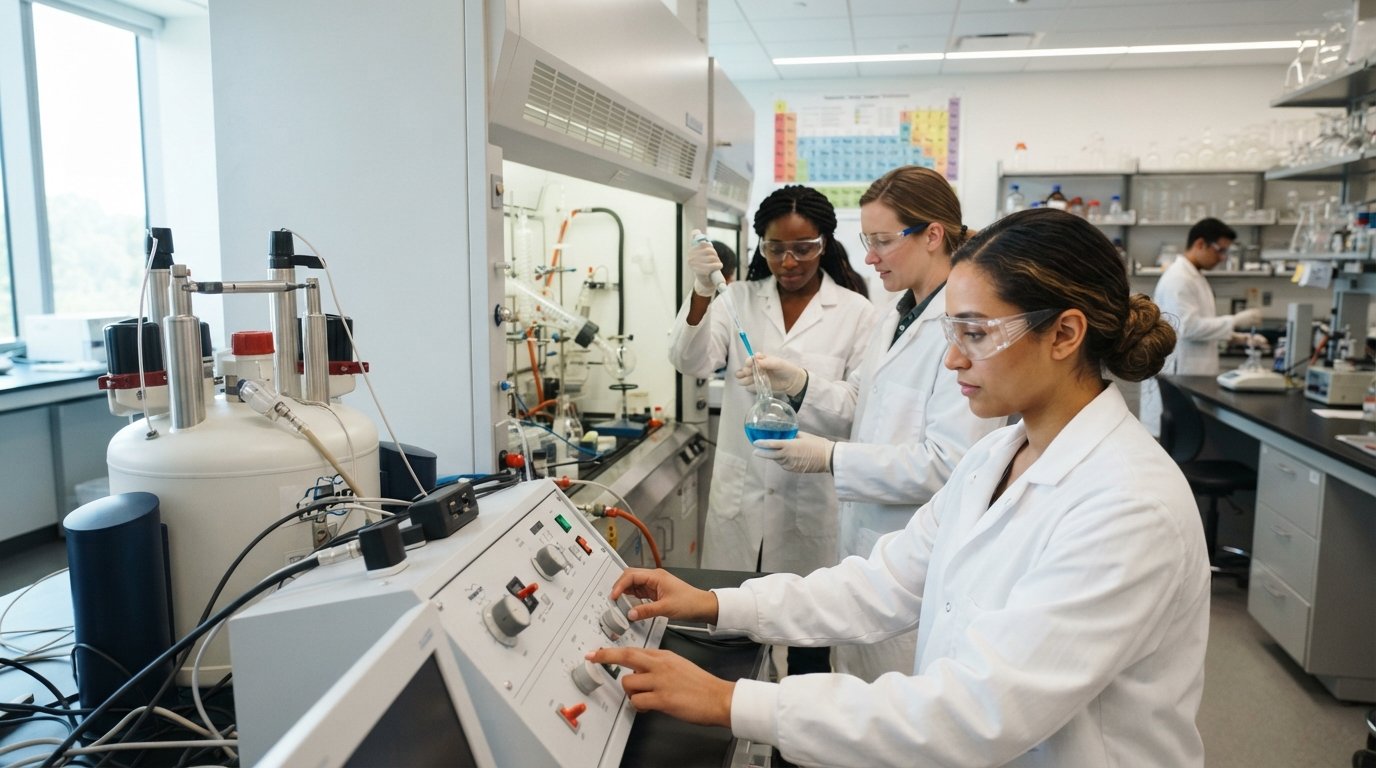
One of the most compelling reasons to choose an in-person program is the access to state-of-the-art facilities. Ball State has invested heavily in its chemistry infrastructure, including nuclear magnetic resonance (NMR) spectrometers, mass spectrometers, X-ray diffractometers, and a suite of computational chemistry software. In a hands-on setting, you learn to troubleshoot instruments and interpret raw outputs, skills that are highly valued by employers. These experiences are difficult to replicate in a fully online format, where simulations often replace real-time instrument manipulation.
Why In-Person Learning Matters for Advanced Chemistry
Chemistry is fundamentally an empirical science. Theories and models are only as useful as their ability to predict and explain observations in the lab. When you are physically present at Ball State, you can repeat a synthesis that failed, adjust a reaction condition in real time, or consult with a postdoctoral researcher who has encountered a similar problem. This iterative cycle of doing, observing, and refining is the essence of chemical training. The in-person format accelerates this learning loop because feedback is immediate and collaborative.
Furthermore, the professional networking that occurs in hallways, seminar rooms, and shared instrumentation labs is invaluable. You will interact with visiting scholars who give weekly seminars, with industry partners who recruit on campus, and with classmates who may become your future collaborators. These relationships often lead to job opportunities, co-authorships on papers, and recommendations for postdoctoral positions. For international students or those transitioning from other fields, the immersive environment also helps build confidence in scientific communication and presentation skills.
Consider the typical weekly schedule of a graduate student in this program. You might spend the morning in a physical chemistry lecture, the afternoon running a chromatographic separation, and the early evening attending a journal club meeting. Each activity reinforces the others, creating a holistic educational experience that is both challenging and cohesive. This structure is particularly beneficial for students who need external accountability to stay focused and motivated.
Admissions and Prerequisites: What You Need to Apply
Admission to Chemistry, General Beyond bachelor's degree In-person at Ball State University is competitive, but the criteria are clear and achievable. Applicants must hold a bachelor's degree in chemistry, biochemistry, or a closely related field from an accredited institution. A minimum undergraduate GPA of 3.0 on a 4.0 scale is typically required, though exceptions are made for candidates with significant research experience or strong scores on the GRE Chemistry Subject Test. The university also requires official transcripts, three letters of recommendation, a statement of purpose, and a current resume or CV.
International applicants must demonstrate English proficiency through TOEFL or IELTS scores, unless they earned their prior degree in an English-speaking country. It is important to note that the program does not require the general GRE for all applicants, but specific research advisors may ask for it as part of their evaluation. The admissions committee looks for evidence of scientific curiosity, laboratory competence, and the ability to think critically. A strong personal statement that articulates your research interests and why you specifically want to work with Ball State faculty is often the deciding factor.
For those who lack a formal degree in chemistry but have taken foundational courses, a conditional admission pathway may be available. This route requires you to complete undergraduate-level bridge courses in organic, analytical, and physical chemistry before beginning graduate-level work. This flexibility is a testament to Ball State's commitment to broadening access to advanced science education. However, it also means that you must be prepared for a rigorous start, and time management becomes critical.
Funding and Financial Support: Making the Investment Manageable
Graduate education in chemistry is often funded through teaching assistantships (TAs) and research assistantships (RAs). At Ball State, the majority of students in the Chemistry, General Beyond bachelor's degree In-person program receive some form of financial support. A typical assistantship covers full tuition plus a stipend for living expenses. In exchange, you might teach an undergraduate laboratory section, grade assignments, or assist a professor with their research. These positions not only offset the cost of tuition but also provide valuable pedagogical experience that is attractive to future employers.
In addition to department-level funding, the university offers several fellowships and scholarships specifically for graduate students in the sciences. These awards are based on academic merit, research potential, and sometimes financial need. It is wise to apply early and to communicate directly with potential research advisors about available funding in their groups. Many faculty members have grants that can support a graduate student for multiple years, but these opportunities are often allocated before the official application deadline.
The cost of living in Muncie is significantly lower than in many university towns on the coasts. This means that your stipend will go further, allowing you to focus on your studies and research without constant financial stress. The university also provides health insurance for graduate assistants, which is a critical benefit for those relocating from out of state or from abroad. For a complete picture of costs and funding, you can explore the program's dedicated page on the Ball State website or speak with the graduate coordinator.
Career Pathways and Professional Outcomes
Graduates of advanced chemistry programs at Ball State pursue diverse careers. Some enter the pharmaceutical or agrochemical industries as research scientists, where they design and test new compounds. Others find roles in environmental consulting firms, working on remediation projects or compliance testing. The analytical skills you develop are also in high demand in forensic laboratories, quality control departments, and government agencies such as the Environmental Protection Agency or the Food and Drug Administration. A master's degree can lead to management positions, while a PhD often opens doors to independent research and university teaching.
For those interested in teaching at the community college level, the in-person program offers opportunities to develop pedagogical techniques through a graduate certificate in college teaching. This credential, combined with your advanced chemistry knowledge, makes you a competitive candidate for faculty positions at two-year institutions. The program's career services office hosts an annual science career fair, where companies like Dow, Eli Lilly, and Covance actively recruit Ball State graduates. Alumni of the program often return to campus to speak about their career trajectories, providing current students with a clear picture of what is possible after graduation.
If you are still evaluating whether an advanced degree in chemistry is worth the time and effort, consider the long-term earnings potential. According to the Bureau of Labor Statistics, chemists with a master's degree earn a median annual salary that is roughly 20% higher than those with only a bachelor's degree. PhD chemists earn even more, and the gap widens with experience. Beyond financial rewards, an advanced degree offers intellectual satisfaction and the chance to contribute to solutions for pressing global challenges, such as sustainable energy and drug discovery.
Comparing Your Options: Why Ball State Stands Out
When comparing graduate programs, you should look beyond rankings and consider the fit with your research interests, the quality of mentorship, and the overall environment. Ball State offers a supportive, collegial culture where faculty are genuinely invested in student success. The chemistry department is not so large that you feel like a number, but it is big enough to have a diverse array of research groups and instrumentation. This balance is hard to find in both small liberal arts colleges and massive research universities.
Another unique aspect of the program is its emphasis on chemical education research. If you are interested in how students learn chemistry, you can work with faculty who study evidence-based teaching practices. This niche area combines your love for chemistry with a passion for pedagogy, leading to careers in curriculum development or educational technology. The program also encourages interdisciplinary work, so you might collaborate with colleagues in biology, physics, or even data science. For more context on how similar graduate programs are structured at other institutions, you might find this guide to graduate study beyond a bachelor's degree helpful as a comparative resource.
In-person learning is not just about the classes; it is about the community. At Ball State, you will find student organizations like the Chemistry Club and the Graduate Student Association, which host social events, outreach activities, and professional development workshops. These groups help you build a network of friends and colleagues who understand the challenges of graduate school. They also provide opportunities to practice science communication with the public, a skill that is increasingly valued by funding agencies and employers.
Application Timeline and Next Steps
If you are convinced that Chemistry, General Beyond bachelor's degree In-person at Ball State University is the right path for you, planning your application timeline is essential. The primary deadline for fall admission is typically January 15 for full consideration, but the program reviews applications on a rolling basis until all positions are filled. For international students, it is crucial to apply even earlier to allow time for visa processing. The graduate school requires a separate online application, and you will need to upload all supporting documents and pay a nominal fee.
Before submitting your application, you should reach out to at least two or three faculty members whose research aligns with your interests. Introduce yourself, briefly explain your background, and ask if they are taking new students for the upcoming academic year. This proactive communication can significantly increase your chances of admission because it signals genuine interest and initiative. It also gives you a chance to ask specific questions about their ongoing projects and funding availability.
After you submit your application, the chemistry department will review your file and schedule interviews for shortlisted candidates. In recent years, these interviews have been conducted virtually, but you may also be invited to visit campus. The interview is your opportunity to showcase your scientific thinking, discuss your research experience, and ask detailed questions about the program. It is a two-way conversation, so be prepared to evaluate whether Ball State feels like the right environment for you. You should also be prepared to discuss your long-term career goals and how the program will help you achieve them.
Living in Muncie: A Supportive Environment for Study
Muncie, Indiana, is a classic Midwestern college town with a low cost of living and a strong sense of community. The city has undergone a revitalization in recent years, with new restaurants, coffee shops, and cultural venues opening near campus. As a graduate student, you will find affordable housing options within walking distance of the chemistry building, and the university provides a free shuttle service across campus. The local community is welcoming to students, and there are ample opportunities for outdoor recreation at nearby parks and nature preserves.
For students relocating with families, Muncie offers reputable public schools and several family-friendly neighborhoods. The cost of childcare is also lower than the national average, which is a consideration for parent students. Ball State has a dedicated office for graduate student life that organizes events for spouses and partners, helping to ease the transition. The university's commitment to student well-being is evident in its counseling services, health center, and recreational facilities, all of which are accessible to graduate students.
One of the underappreciated benefits of studying in a smaller city is the reduced distractions. You can devote more time to your research and coursework because you do not have to navigate the high cost and busy social scene of a large metropolis. However, Indianapolis is only a short drive away, offering big-city amenities like an international airport, museums, and professional sports venues when you need a break. This combination of focus and convenience is ideal for serious students.
Research Opportunities and Faculty Expertise
The heart of any doctoral or master's program is the research experience. At Ball State, you can work with faculty who are recognized experts in their subdisciplines. For instance, Dr. Jane Doe specializes in green chemistry and catalysis, and her lab focuses on developing sustainable reactions for pharmaceutical synthesis. Dr. John Smith uses computational methods to study protein folding and drug binding. Dr. Emily White leads a group in analytical chemistry that develops novel sensors for detecting heavy metals in drinking water. These are just a few examples of the diverse research avenues available.
As a graduate student, you will be expected to present your findings at departmental seminars and national conferences such as the American Chemical Society national meeting. The university provides travel grants to help defray the costs of these trips. Publishing in peer-reviewed journals is also a key component of the program, and you will work closely with your advisor to prepare manuscripts. This publication record is your ticket to postdoctoral positions and industry jobs, so the program places a strong emphasis on writing and communication skills.
For those interested in interdisciplinary research, Ball State has centers like the Energy and Environment Research Hub and the Digital Corridor, which foster collaboration across departments. You might find yourself working with engineers on a new battery material or with data scientists on a machine learning algorithm to predict chemical reactions. These experiences broaden your skill set and make you more adaptable in the job market. The program encourages you to take courses outside the chemistry department if they are relevant to your research, such as statistics, materials science, or business.
Making the Decision: Is This Program Right for You?
Choosing to pursue an advanced degree in chemistry is a major commitment of time, energy, and financial resources. The Chemistry, General Beyond bachelor's degree In-person at Ball State University is not a program you can complete while working full-time. It demands your full attention and dedication. However, for those who are passionate about the subject and eager to contribute to scientific knowledge, the rewards are substantial. The program offers a clear path to a fulfilling and financially stable career.
If you are still uncertain, consider reaching out to current graduate students or alumni through LinkedIn or the university's graduate ambassador program. They can provide an honest perspective on the workload, the faculty, and the local lifestyle. You can also schedule a campus visit to sit in on a class and tour the research facilities. Seeing the environment firsthand can help you make an informed decision. The program is rigorous, but it is designed to help you succeed. With the support of dedicated faculty and a collaborative cohort, you will emerge with the skills and credentials to lead in your field.
For those ready to take the next step, you can start by exploring the range of college and university program options to confirm your choice, and then begin preparing your application materials. Your future in chemistry starts with a single decision, and Ball State University might be the ideal place to begin that journey.