
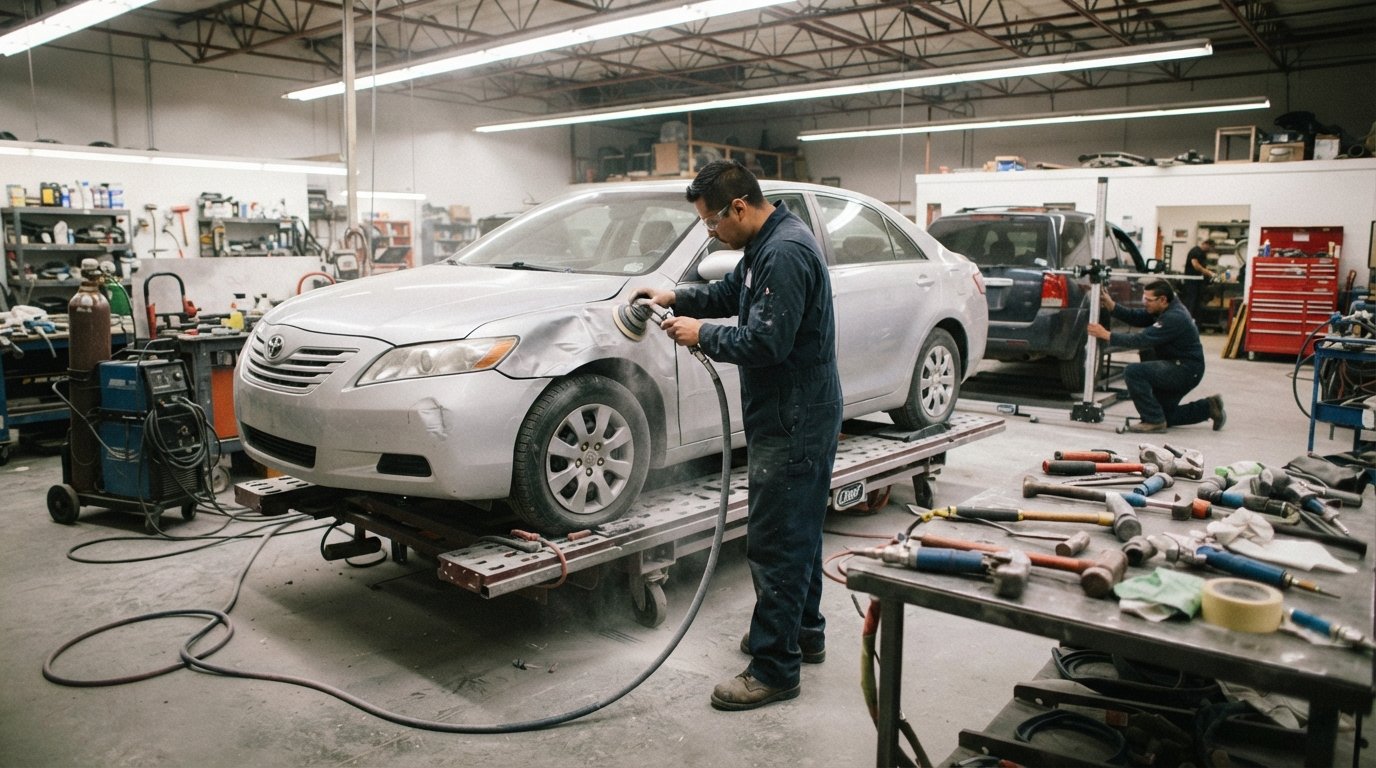
Autobody Certificate at Berks Career & Technology Center
Explore the Autobody/Collision and Repair Technology/Technician Certificate, 1 year to less than 2 years In-person at Berks Career & Technology Center. Call (877)-218-7081 for guidance.

By Reed Ingram
Walk into any busy collision shop in southeastern Pennsylvania and you will notice something quickly: the technicians doing the precise panel alignment, structural measuring, and refinish work are in short supply. Insurance carriers need repaired vehicles turned around fast, dealerships need certified body staff, and independent shops need people who can weld, pull, and paint to manufacturer standards. That gap is exactly why the Autobody/Collision and Repair Technology/Technician Certificate, 1 year to less than 2 years In-person at Berks Career & Technology Center has become one of the most practical, hands-on pathways into a skilled trade that still rewards people who show up, learn the craft, and can document their hours.
Berks Career & Technology Center, often shortened to BCTC, is a regional career and technical education provider based in Leesport, Pennsylvania, serving students from Berks County and surrounding areas. Its collision repair program is designed for learners who want job-ready skills without committing to a four-year degree. The credential itself falls into the category of a certificate program lasting one year to less than two years, which matters for financial aid, workforce funding, and how quickly you can enter the labor market.
If you are comparing training routes, it helps to think about this program the way an employer would. Shops do not hire a transcript; they hire hands. The certificate signals that you completed structured instruction in non-structural and structural repair, refinishing, estimating, and shop safety. Many graduates move into entry-level technician roles, then build toward specialties like frame straightening, aluminum repair, or automotive refinishing, where pay climbs with certifications and speed.
What the Autobody Certificate Program Covers
The curriculum at BCTC is built around the tasks that appear on real repair orders. Students learn how modern vehicles are constructed, how collision energy travels through a unibody or body-on-frame design, and why repair procedures must follow manufacturer guidelines. Instruction typically blends classroom theory with extensive lab time, because collision repair is a tactile skill: you cannot learn panel gap adjustment from a textbook alone.
Expect coursework in metal straightening, MIG welding and sectioning, plastic and composite repair, surface preparation, priming, color matching, and spray gun technique. Estimating and customer communication often appear too, since technicians increasingly write supplements and document damage with photos for insurers. Safety training covers personal protective equipment, ventilation, hazardous material handling, and tool maintenance.
Because the program is delivered in person, students get daily access to shop equipment such as frame machines, welding stations, spray booths, and measuring systems. That access is the core advantage of campus-based training over purely online alternatives. You practice on actual vehicles and panels, make mistakes under supervision, and build the muscle memory that entry-level employers expect during a working interview.
Typical Skill Areas You Will Develop
- Collision damage analysis and repair planning
- Unibody and frame measuring and straightening
- MIG welding, panel replacement, and corrosion protection
- Refinishing: prep, priming, sealing, basecoat, and clearcoat
- Estimating, documentation, and shop workflow basics
Students who finish these skill blocks often pursue optional industry certifications, such as I-CAR credentials or manufacturer-specific training, after hire. Those add-ons matter because insurers and automakers increasingly require documented repair competence, especially on advanced high-strength steel and aluminum structures.
Admissions, Cost, and the One-Year Timeline
Admission to a career and technology center program is usually less bureaucratic than a traditional college application. Prospective students typically complete an application, provide transcripts or proof of prior education, and may attend an information session or interview. Some programs require basic math and reading readiness, since estimating and measurement are part of the job. High school students in the sending districts may enter through their school's career pathways, while adults enroll directly.
Cost is a major reason people choose this route. Compared with a two-year associate degree, a certificate of one year to less than two years reduces tuition exposure and gets you earning sooner. Financial aid may be available depending on the institution's accreditation and your eligibility, and workforce development grants sometimes cover short-term training in high-demand trades. Always confirm current tuition, tool costs, and material fees with the school, because collision programs often require students to purchase or rent hand tools and safety gear.
One practical step many applicants overlook is comparing their local options before committing. A free matching service such as HigherEducationAdvisor lets prospective students browse sponsored online and campus programs, compare fields of study, and request information from participating schools with no obligation to enroll. It is not a college and does not grant credit, but it can save hours of research when you are weighing a hands-on certificate against a degree path. You can also explore program directories and state listings through this fast-track certificate example to see how short-term credentials are structured in other high-demand fields.
Why In-Person Training Wins in Collision Repair
Online learning has transformed many fields, but autobody repair is not one of them. You cannot feel a weld puddle through a webcam, and you cannot practice spray pattern overlap in a browser. In-person instruction at a facility like BCTC provides supervised repetition, immediate instructor feedback, and exposure to the noise, heat, and pace of a real shop environment.
Employers consistently report that new hires struggle most with speed and consistency, not knowledge. A structured lab environment compresses that learning curve because students repeat the same operations dozens of times before graduation. They also learn shop culture: showing up on time, keeping a clean bay, tagging tools, and communicating with a estimator when hidden damage appears.
Another advantage is networking. Instructors in career and technology centers often maintain relationships with local shops, dealerships, and insurers. Those relationships turn into job leads, internships, and sometimes direct hiring before graduation. In a trade where reputation travels by word of mouth, that local network can be worth as much as the certificate itself.
Career Outcomes and Entry-Level Pay
Graduates commonly start as collision repair technicians, refinish technicians, estimator trainees, or shop helpers. Entry-level pay varies by region and shop type, but the trajectory is what matters: technicians who master estimating, structural repair, or high-end refinishing can move into lead technician, shop foreman, or estimator roles within a few years. Some eventually open independent shops or mobile paint correction businesses.
Bureau of Labor Statistics data for automotive body and related repairers shows steady demand tied to vehicle miles driven and accident rates. Even with advanced driver assistance systems reducing some collisions, the complexity of modern repairs has increased, which raises the skill premium. That is good news for technicians who invest in ongoing training.
How to Decide If This Certificate Fits Your Goals
This program suits people who prefer working with their hands, enjoy problem solving, and want a defined path into employment without a long academic detour. It also suits career changers who need a faster return on their training investment. If you dislike physical work, strong odors, or strict safety routines, collision repair will feel like a poor fit regardless of pay.
Before enrolling, visit the campus, tour the shop, and ask about completion rates, job placement support, and which certifications are embedded in the curriculum. Ask current students what a typical day looks like and how much homework or theory is required. Those answers will tell you more than any brochure.
Finally, plan your funding and your schedule. Many adult learners work while training, so evening or daytime cohort options matter. Confirm whether the program runs on a semester calendar or a continuous intake model, and calculate total cost including tools, PPE, and transportation. A one-year to less than two-year certificate is only a bargain if you finish it and convert it into work.
For prospective students weighing multiple options, gathering information from several schools at once is smart. Submitting a request through a matching platform does not obligate you to apply or enroll, and it gives you a side-by-side view of tuition, format, and program length. The more data you collect early, the fewer surprises you face later.
The Autobody/Collision and Repair Technology/Technician Certificate, 1 year to less than 2 years In-person at Berks Career & Technology Center represents a straightforward bargain: focused training, real shop time, and a credential employers recognize. If you are ready to trade classroom theory for hands-on skill and enter a trade with genuine demand, this pathway deserves a serious look. Call (877)-218-7081 to speak with an education advisor about your options.