
Baker College Mechatronics Associate Degree: 2-Year Path
Explore the Mechatronics, Robotics, and Automation Engineering Associate's degree at Baker College. Call 8772187081 to learn about this 2-year program.

By Stacy Harper
Manufacturing floors hum with robotic arms, automated assembly lines, and control systems that blend mechanical motion with digital intelligence. Behind every one of those systems stands a technician who understands how motors, sensors, and software work together. If you want to be that person, the Mechatronics, Robotics, and Automation Engineering Associate's degree, usually 2 years In-person at Baker College, offers a direct route into one of the fastest-growing technical fields in the country. This program combines hands-on electrical training, mechanical systems, and programmable logic controllers into a single, focused credential that employers recognize.
What Is Mechatronics, Robotics, and Automation Engineering?
Mechatronics sits at the intersection of mechanical engineering, electronics, computer control, and robotics. The word itself blends "mecha" from mechanical and "tronics" from electronics. In practice, a mechatronics technician designs, installs, troubleshoots, and maintains the automated systems that keep modern production lines running. That could mean programming a robotic arm on an assembly line, calibrating sensors on a packaging machine, or diagnosing why a conveyor belt stopped responding to its controller.
Automation engineering takes that foundation and applies it at scale. Entire factories now rely on interconnected systems that communicate through industrial networks, report performance data, and adjust operations in real time. Robotics adds another layer: machines that can move, grip, weld, paint, and inspect with precision that human hands cannot match at speed. Employers need people who can speak all three languages, mechanical, electrical, and software, and that is exactly what a mechatronics degree prepares you to do.
The field has expanded well beyond traditional manufacturing. Food processing plants, pharmaceutical warehouses, logistics centers, and even agricultural operations now depend on automated systems. According to the U.S. Bureau of Labor Statistics, employment for electro-mechanical and mechatronics technologists is projected to grow steadily through the decade, driven by ongoing automation across industries. That demand translates into strong job security for graduates who hold a relevant associate's degree and can demonstrate hands-on competence.
Why Choose Baker College for This Program?
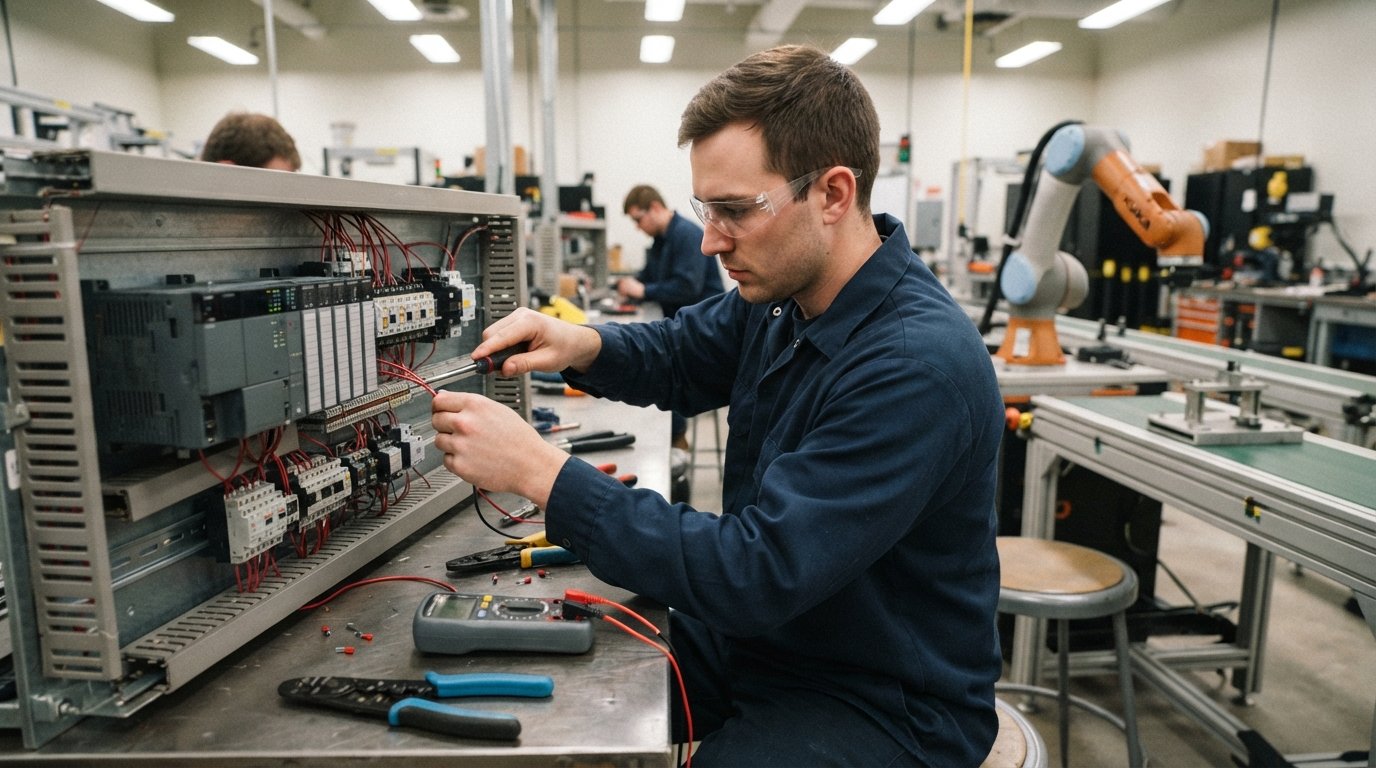
Baker College has built a reputation in Michigan and beyond for career-focused technical education. The Mechatronics, Robotics, and Automation Engineering Associate's degree, usually 2 years In-person at Baker College, reflects that mission directly. Classes take place in labs equipped with industrial-grade equipment, not simulations alone. Students work with actual programmable logic controllers, robotic arms, motor drives, and pneumatic systems that mirror what they will encounter on the job.
The in-person format matters here. Mechatronics is a tactile discipline. You learn to wire a control panel by wiring one. You learn to program a robot by standing next to it and watching how it responds. Online videos and textbooks can explain theory, but they cannot replicate the experience of tracing a fault through a live circuit or tuning a servo motor until it moves smoothly. Baker College's decision to keep this program in person ensures that graduates walk into interviews with real troubleshooting hours behind them.
Baker College also maintains employer partnerships throughout the region. These relationships feed internship opportunities, guest speakers, and job placement support. Many students begin working in entry-level technician roles before they even finish the degree, and those roles often convert to full-time positions after graduation. The program's advisory board includes industry professionals who review curriculum regularly, so courses stay aligned with the tools and techniques employers actually use.
For students who want to explore other flexible education options alongside or after this program, platforms that connect learners with sponsored schools can help broaden the search. One useful starting point is this guide to Delgado Online Business Administration Associate Degree, which shows how associate-level credentials can open career doors in different fields.
What You Will Learn in Two Years
The curriculum builds progressively. First-year courses establish a foundation in electrical theory, DC and AC circuits, mechanical systems, and basic programming logic. Students learn to read schematics, use multimeters and oscilloscopes, and understand how motors convert electrical energy into motion. Safety practices, including lockout/tagout procedures and proper handling of industrial equipment, are woven into every lab from day one.
Second-year courses move into advanced topics: programmable logic controllers (PLCs), robotics programming, human-machine interfaces (HMIs), industrial networking, and automated system integration. Students design and build complete systems that respond to sensor inputs, execute logic sequences, and drive actuators. Capstone projects often simulate real production scenarios, such as a sorting station that identifies parts by color and routes them to different bins.
By graduation, students should be able to:
- Read and interpret electrical schematics, mechanical drawings, and control diagrams.
- Program and troubleshoot PLCs using ladder logic and other common languages.
- Set up, operate, and maintain industrial robotic systems.
- Integrate sensors, actuators, and controllers into functional automated systems.
- Apply safety standards and best practices in industrial environments.
These competencies align with what employers list in job postings for automation technicians, robotics technicians, controls technicians, and maintenance technicians. The breadth of the degree means graduates are not locked into a single role. They can move between maintenance, production support, system integration, and field service depending on their interests and the opportunities available in their area.
Career Outcomes and Salary Expectations
Graduates of mechatronics and automation programs typically enter the workforce in roles that pay above the median for workers with an associate's degree. According to BLS data, electro-mechanical and mechatronics technologists earned a median annual wage of around $65,000 in recent years, with experienced technicians and those in high-cost regions earning considerably more. Overtime opportunities and shift differentials can push total compensation higher, especially in manufacturing environments that run multiple shifts.
Career paths often begin with titles like automation technician, robotics technician, or controls technician. With experience, graduates can advance into roles such as automation engineer, controls engineer, maintenance supervisor, or systems integrator. Some pursue additional certifications in specific PLC brands or robotic platforms, which can boost earning potential and make them more competitive for specialized positions. Others continue their education, transferring credits toward a bachelor's degree in engineering technology or a related field.
The geographic flexibility of this career is another advantage. Automation is not concentrated in one region. While Michigan, Ohio, Indiana, and other manufacturing-heavy states offer abundant opportunities, automated systems also power warehouses in California, food processing plants in the Midwest, and pharmaceutical facilities on the East Coast. Graduates who are willing to relocate or travel for field service work can often command higher starting salaries.
Admission Requirements and How to Apply
Baker College admission for this program follows the institution's standard undergraduate requirements. Prospective students typically need a high school diploma or equivalent, and they may need to submit transcripts for review. Some applicants take placement assessments in math and English to ensure they are ready for college-level coursework. Because the program is hands-on and cohort-based, early application is encouraged, especially for fall start dates.
Students who need to strengthen their math or writing skills before beginning technical courses can often take developmental courses through the college. Financial aid, scholarships, and payment plans are available for those who qualify. Prospective students should speak with an admissions advisor to understand costs, timelines, and any prerequisite requirements specific to the mechatronics program.
For learners who want to compare multiple program options before committing, a college matching site like TopStudents can help. It lets prospective students browse by subject or state, review sponsored school listings, and request information from programs that fit their goals, with no obligation to apply or enroll. That kind of side-by-side comparison can make the decision clearer, especially for adult learners balancing work, family, and school.
Is This Degree Right for You?
The Mechatronics, Robotics, and Automation Engineering Associate's degree, usually 2 years In-person at Baker College, suits people who enjoy solving physical problems, working with their hands, and seeing immediate results. If you like taking things apart to understand how they work, if you are comfortable with technology, and if you want a career that will not be easily replaced by the very automation you are learning to build, this path deserves serious consideration.
It is also a good fit for career changers. Many students entering mechatronics programs have prior experience in construction, automotive repair, HVAC, or military service. Those backgrounds provide a practical foundation that translates well into the lab. The two-year timeline is manageable for working adults, and the in-person format creates accountability and peer support that online-only programs sometimes lack.
Before enrolling, consider your tolerance for shift work, your willingness to continue learning as technology evolves, and your interest in working in industrial environments. Mechatronics is not a desk job, and that is precisely what draws many people to it. The work is active, varied, and essential. Every automated system that keeps a factory running depends on someone who understands how it works, and this degree prepares you to be that person.
If you are ready to take the next step, reach out to Baker College admissions or use a matching service to explore programs and request information. The field is growing, the skills are in demand, and the path is shorter than you might think.