
CET-Soledad Truck and Bus Driver Certificate: 12-Week CDL Path
The CET-Soledad truck and bus driver certificate takes 12 weeks to under a year and prepares you for a CDL and entry-level driving jobs.

By Justin Thomas
Finding a fast, affordable route into a commercial driving career can feel overwhelming when tuition bills, licensing requirements, and employer expectations all compete for your attention. The Truck and Bus Driver/Commercial Vehicle Operator and Instructor Certificate, 12 weeks to less than 1 year In-person at CET-Soledad is one of the more direct paths available for people who want to earn a Commercial Driver's License, qualify for entry-level trucking or bus driving jobs, and even step into instructor roles later on. The program packs classroom instruction, yard practice, and behind-the-wheel training into a compressed schedule, so you can move from orientation to job applications in a matter of months rather than years. This guide walks through what the certificate covers, who it fits best, how to prepare, what it costs in terms of time and effort, and how to evaluate whether it lines up with your goals.
What the CET-Soledad Truck and Bus Driver Certificate Covers
CET-Soledad is a community-based career training center in California's Central Valley, and its commercial vehicle operator program is built around the skills that state licensing agencies and freight, transit, and passenger carriers actually test and hire for. The certificate is designed to take roughly 12 weeks to under a year, depending on your schedule, prior experience, and how quickly you master the practical maneuvers. Instruction happens in person, which matters for a field where muscle memory, mirror discipline, and air brake checks cannot be learned from a video alone.
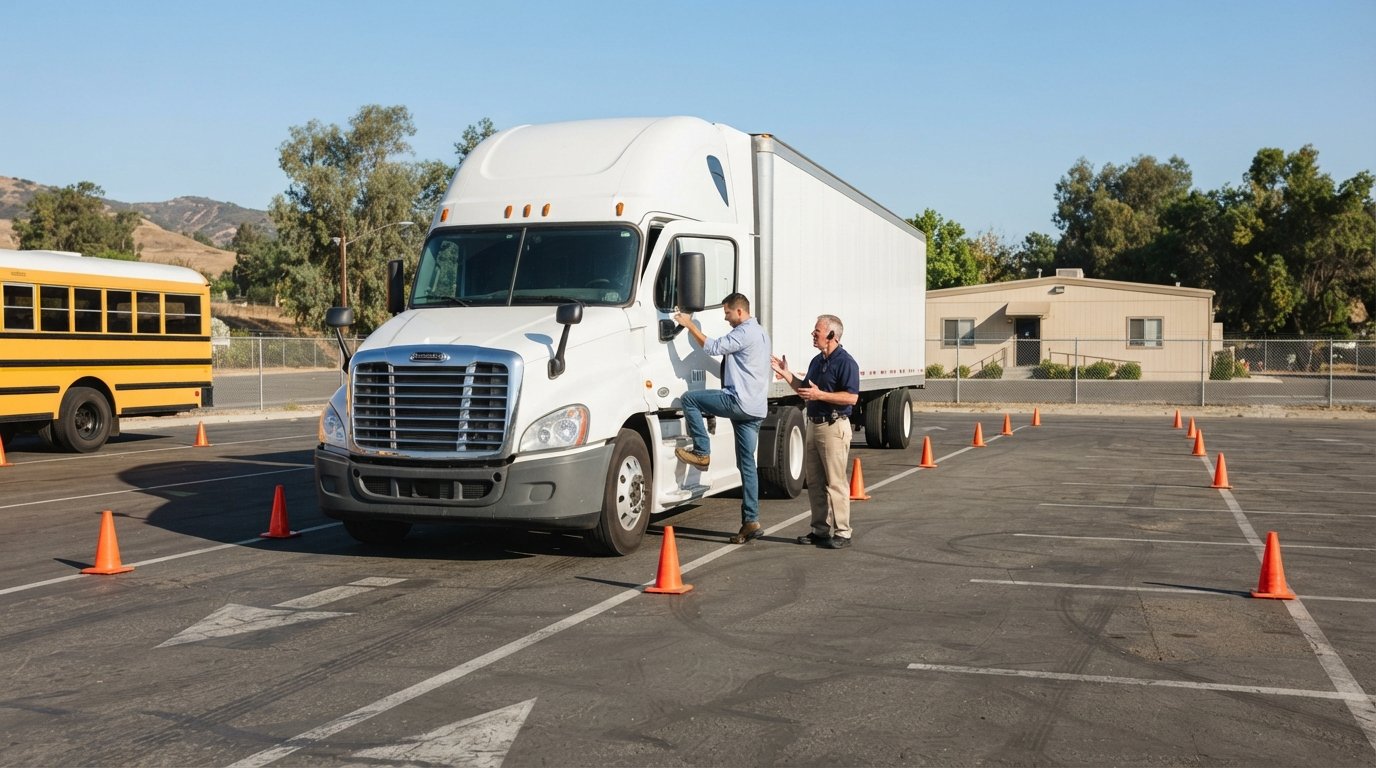
The curriculum typically blends three layers of training. First comes classroom work covering federal motor carrier safety rules, hours-of-service limits, pre-trip inspection procedures, and map reading. Next comes yard practice, where students drill straight-line backing, offset backing, alley docking, and parallel parking in a controlled lot. Finally, students move to public roads for behind-the-wheel hours that build confidence with lane changes, merging, railroad crossings, and city and highway traffic. Together, these layers prepare you for the Class A or Class B skills test and the written knowledge exams.
Because the certificate also includes an instructor preparation angle, some students pursue it with the goal of teaching others later. That opens doors to roles at driving schools, corporate safety departments, and workforce development programs, where experienced operators train the next wave of drivers. Even if you never teach, the instructor-focused material tends to sharpen your own understanding of regulations, which helps on the job and during interviews.
Class A versus Class B: Choosing Your Track
Most commercial driving careers start with either a Class A or Class B license, and the CET-Soledad program helps students understand which one fits their target job. A Class A license allows you to operate tractor-trailers and other combination vehicles, which is the standard credential for long-haul and regional freight jobs. A Class B license covers straight trucks, dump trucks, and many buses, including school buses and transit vehicles in some cases. Passenger and school bus endorsements add further requirements, such as background checks and additional knowledge tests.
If you are undecided, think about the work environment you want. Class A drivers often spend long stretches on highways with irregular schedules and time away from home. Class B drivers frequently work more local routes with daily home time, though pay structures vary widely by employer and region. The certificate format at CET-Soledad lets you build a foundation in either direction, and instructors can help you map your choice to actual job postings in the area.
Who Thrives in a 12-Week to Under-a-Year Program
A compressed certificate is not for everyone, but it is a strong fit for specific types of learners. Adult career changers who need to start earning quickly often choose this route because it minimizes time out of the workforce. Recent high school graduates who want a trade credential without a four-year degree also do well, especially if they enjoy hands-on work and prefer structured routines. Veterans, warehouse workers, delivery drivers, and agricultural equipment operators frequently transition into commercial driving because their existing skills translate directly.
You do not need a college degree to enroll, but you do need to meet basic eligibility requirements. Most programs expect a valid driver's license, a clean enough driving record to be insurable, the ability to pass a Department of Transportation physical, and a negative drug screen. Reading and comprehension skills matter too, because the written exams and pre-trip inspections rely on understanding technical language. If any of these areas concern you, ask admissions staff early so you can address issues before the first day of class.
Prospective students who want to compare this kind of hands-on certificate with broader academic options can explore degree pathways through resources like business and commerce associate degree options online, which shows how vocational credentials and traditional degrees sometimes overlap in fields like logistics and transportation management. That comparison helps you decide whether a short certificate or a longer degree better serves your five-year plan.
How the Training Schedule and Curriculum Are Structured
Because the program runs between 12 weeks and just under a year, schedules vary based on whether you attend full time or part time. Full-time students often train during weekday daytime hours, moving through classroom and yard sessions in a fixed sequence. Part-time or evening cohorts may stretch the timeline closer to the one-year mark, which can help people who need to keep a current job while they retrain. In-person attendance is required for the driving portions, so plan your transportation and childcare logistics before enrolling.
A typical week blends lecture, demonstration, and supervised practice. Instructors introduce a maneuver, show it step by step, and then watch students perform it repeatedly until it becomes automatic. Evaluation is continuous: you will be scored on safety habits, communication, and precision, not just on whether you eventually complete a maneuver. That continuous feedback loop is one reason in-person training outperforms self-study for commercial driving.
The sequence below reflects how most students progress through the certificate, though exact order can shift with weather and equipment availability:
- Orientation and eligibility verification, including DOT physical and drug screen coordination.
- Classroom instruction on safety regulations, hours of service, and vehicle systems.
- Pre-trip inspection drills and basic vehicle control in the yard.
- Advanced backing and docking maneuvers with instructor coaching.
- Behind-the-wheel road training, including highway and night driving where required.
- CDL knowledge test preparation and skills test scheduling.
- Job search support, resume help, and employer connection events.
Each stage builds on the last, which is why missing sessions can set you back. If life circumstances force an absence, communicate early so instructors can help you catch up before the next milestone. The compressed timeline rewards consistency, and students who treat the program like a full-time job tend to finish on the shorter end of the range.
Costs, Financial Considerations, and Return on Investment
Tuition for commercial driving programs varies by region, equipment, and program length, and CET-Soledad is no exception. Rather than quoting a single number that may change, focus on the categories of cost you should budget for and the questions you should ask admissions. Tuition usually covers instruction, use of training vehicles, and some testing preparation. Additional expenses can include the DOT physical, drug testing, permit fees, license fees, and sometimes a deposit for equipment damage. Ask for a written breakdown so nothing surprises you halfway through.
Financial aid options for short vocational certificates differ from those for degree programs. Some students qualify for workforce grants, veteran benefits, or employer sponsorship if a current or future employer needs drivers. Others pay out of pocket and recoup the cost within the first few months of full-time driving work. To estimate your return on investment, compare the total program cost against realistic starting wages in your area, then factor in how quickly you can begin earning. A certificate that costs more but places graduates faster can outperform a cheaper program with weak job support.
If you are also weighing longer academic credentials, it helps to look at how students finance different education types. Platforms such as TopStudents let prospective students browse online and campus degree programs by subject or state and request information from participating schools without any obligation to apply. That kind of comparison shopping is useful when you want to see whether a certificate, an associate degree, or a bachelor's program aligns best with your budget and career timeline.
Preparing for Success Before and During the Program
The students who get the most out of a 12-week to under-a-year certificate start preparing before day one. That means reviewing the CDL manual for your state, practicing basic driving habits in your personal vehicle, and getting your documents in order. It also means being honest about your schedule: commercial driving training demands punctuality, and repeated tardiness can cost you valuable behind-the-wheel hours.
During the program, a few habits separate strong candidates from struggling ones. Study the pre-trip inspection sequence until you can recite it from memory, because that portion of the skills test trips up many first-time test takers. Ask questions the moment a maneuver stops making sense, since instructors can correct small errors before they harden into bad habits. Stay physically fit enough to handle long days of sitting, lifting, and climbing in and out of vehicles safely.
It also helps to think about your job search before graduation. Employers value clean driving records, reliable attendance, and a professional attitude as much as they value technical skill. Start collecting references, updating your resume, and researching carriers or transit agencies in your area during the final weeks of training. Many programs host recruiter visits or job fairs, and showing up prepared can give you a head start over classmates who wait until after testing.
Career Outcomes and Next Steps After Certification
Graduates of commercial vehicle operator programs move into a range of roles, and the certificate itself is often just the beginning. Entry-level positions include over-the-road truck driver, local delivery driver, dump truck operator, school bus driver, and transit bus operator. With experience and additional endorsements, you can pursue hazmat hauling, tanker work, flatbed hauling, or instructor positions at training schools and corporate safety teams.
Pay varies by region, route type, and employer, but commercial driving generally offers predictable demand because freight and passenger transport underpin the economy. Many drivers value the ability to earn without a four-year degree, though advancement often depends on staying current with regulations and maintaining a spotless safety record. If you eventually want to move into dispatch, safety management, or logistics supervision, additional coursework in business or supply chain management can complement your driving experience.
Before enrolling in the Truck and Bus Driver/Commercial Vehicle Operator and Instructor Certificate, 12 weeks to less than 1 year In-person at CET-Soledad, visit the campus if you can, talk to current students, and ask about job placement rates and employer partnerships. Compare the total cost, schedule, and support services against other programs in your area. The right choice is the one that gets you licensed, employed, and confident behind the wheel in the shortest realistic time frame for your situation.