
Computer Systems Technician Degree at Central Carolina: 2-Year Path
Launch a fast-paced IT career with a 2-year Computer Systems Technology Associate's degree from Central Carolina, blending online and hands-on training.

By Frank DeCicco
If you are looking for a career that blends hands-on technical skills with reliable job growth, the Computer/Computer Systems Technology/Technician Associate's degree, usually 2 years Mix of in-person and online at CENTRAL CAROLINA COMMUNITY COLLEGE, is a smart investment in your future. This program is designed for students who want to build, repair, and maintain computer systems without spending four years in a traditional university setting. In this article, we will explore what this degree entails, the skills you will gain, the career opportunities that await, and how the flexible blend of in-person and online learning at Central Carolina Community College (CCCC) can fit your life.
Technology is the backbone of nearly every modern business, and skilled computer technicians are in constant demand. Whether it is troubleshooting a network, configuring new hardware, or securing sensitive data, these professionals keep the digital world running. The two-year associate degree path is an excellent way to enter this field quickly, and the hybrid format at CCCC means you can balance coursework with work or family responsibilities. By the end of this program, you will be ready to pursue entry-level roles such as computer support specialist, IT technician, or network administrator.
Why Choose an Associate Degree in Computer Systems Technology?
An associate degree in computer systems technology is a focused, practical credential that prepares you for immediate employment. Unlike a bachelor's degree, which often includes general education requirements and theoretical coursework, this two-year program emphasizes applied skills. You will spend more time working with actual hardware and software, solving real-world problems, and learning the tools used in the field today. This hands-on approach means you graduate with a portfolio of skills that employers can trust.
Another significant advantage is the return on investment. Community college tuition is typically much lower than that of four-year institutions, and because the program is only two years, you can start earning sooner. According to the Bureau of Labor Statistics, computer support specialists earn a median annual wage of over $57,000, and the field is projected to grow faster than average. For a relatively small educational investment, you can enter a stable and lucrative career. Plus, many students continue their education later, applying their associate degree credits toward a bachelor's degree if they choose.
The hybrid learning model at Central Carolina Community College is particularly appealing for adult learners and working students. You can complete lectures and theoretical modules online at your own pace, then attend in-person labs and workshops to gain hands-on experience. This blend offers the best of both worlds: the flexibility of online education and the essential practical training that only a physical lab can provide. If you are juggling a job or family, this format can be the difference between earning a degree and putting it off.
What You Will Learn in the CCCC Program
The curriculum for the Computer/Computer Systems Technology/Technician Associate's degree at CCCC is carefully designed to cover the core competencies demanded by employers. You will start with foundational courses in computer hardware, operating systems, and networking. These classes teach you how to assemble a computer from parts, install and configure Windows and Linux, and set up local area networks. The hands-on labs are where you truly cement these skills, working with real components and troubleshooting actual issues.
As you progress, you will dive into more specialized topics such as cybersecurity, server administration, and cloud computing. For instance, in a cybersecurity course, you might learn to identify vulnerabilities and implement basic security measures. In a server administration class, you could practice setting up and managing Windows Server or Linux servers. The program also includes coursework in customer service and communication, because technicians often interact with non-technical users and must explain solutions clearly.
Here is a snapshot of the types of courses you can expect to take:
- Introduction to Computer Hardware and Software
- Network Fundamentals (Cisco or CompTIA-aligned)
- Operating Systems: Windows, Linux, and macOS
- Cybersecurity Essentials
- Server Administration and Virtualization
- Cloud Computing Basics
Beyond these core areas, you may have the opportunity to choose electives that align with your career goals, such as database management or mobile device repair. The program is structured to build your skills progressively, ensuring that by the time you graduate, you have a comprehensive understanding of computer systems from the ground up.
Hands-On Experience and Certifications
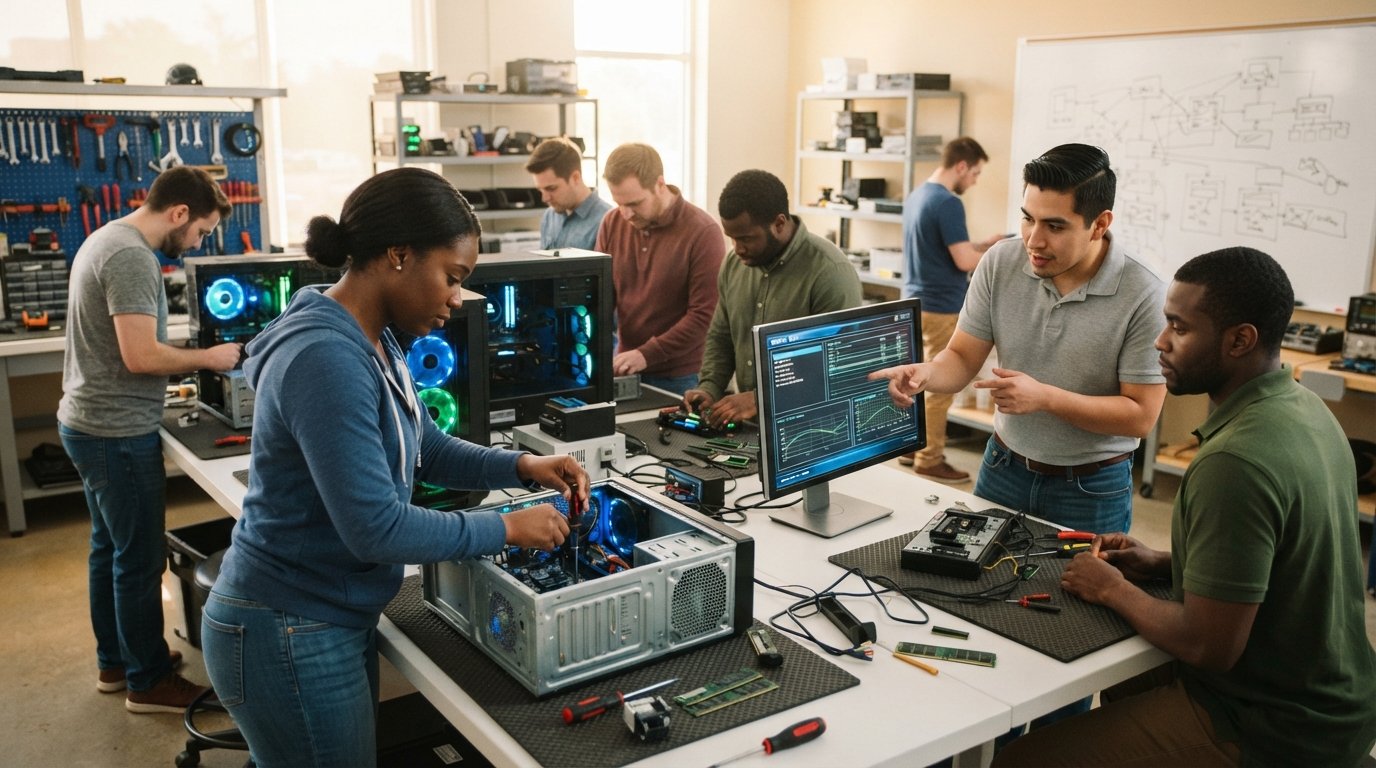
One of the standout features of the CCCC program is the emphasis on practical, lab-based learning. The in-person component is not just about attending lectures; it is about getting your hands on equipment. You will work in dedicated computer labs with the latest hardware, network simulators, and software tools. This experience is invaluable when you start job hunting, because you can confidently tell employers that you have already performed the tasks they need.
Moreover, the curriculum is often aligned with industry certifications. Many courses prepare you for exams like CompTIA A+, Network+, or Security+. These certifications are highly respected by employers and can significantly boost your resume. While the degree itself is a strong credential, earning these industry-standard certificates while you study gives you an immediate edge over other candidates. The program may also offer opportunities to participate in internships or capstone projects, where you can apply your skills in a real-world business setting.
Career Opportunities After Graduation
With an associate degree in computer systems technology, you can pursue a variety of entry-level positions. The most common job titles include computer support specialist, help desk technician, IT associate, and network support technician. In these roles, you will be responsible for installing and configuring computer systems, diagnosing hardware and software problems, and providing technical support to users. You might work in a corporate IT department, a school, a hospital, or a managed service provider.
The skills you learn are also transferable to more specialized roles as you gain experience. For example, you could move into network administration, cybersecurity analysis, or systems administration. Many technicians start in support roles and then advance by earning additional certifications or pursuing a bachelor's degree. The foundation you build at CCCC opens doors to lifelong career growth.
According to the U.S. Bureau of Labor Statistics, employment of computer support specialists is projected to grow 6% from 2022 to 2032, about as fast as the average for all occupations. This growth is driven by the increasing reliance on technology in every sector. In North Carolina, where Central Carolina Community College is located, the tech industry is booming, with major companies and startups alike seeking skilled IT professionals. Graduates of this program are well-positioned to take advantage of this demand.
Flexibility of In-Person and Online Learning
The hybrid format of this degree is one of its most attractive features. Online coursework allows you to study when it suits you, whether that is early in the morning before work or late at night after the kids are in bed. You can review lecture videos, participate in discussion forums, and complete quizzes at your own pace. This flexibility is ideal for students who have other commitments but are motivated to advance their education.
On the other hand, the in-person sessions are crucial for the practical components. You cannot learn to solder a motherboard or configure a router solely from a textbook. The on-campus labs at CCCC provide a collaborative environment where you can work alongside peers and receive immediate feedback from instructors. These sessions also allow you to build a professional network, which can be valuable when you start seeking employment. The combination of online theory and in-person practice ensures you are not just learning concepts, but also how to apply them.
For students who live far from the campus or have irregular schedules, the online portion can reduce commuting time and costs. However, you must be self-disciplined to stay on top of your online coursework. The program is designed to be manageable, but it requires commitment. If you are the type of learner who thrives on interaction, the in-person labs will provide that, while the online modules give you the freedom to learn at your own speed.
How to Apply and Financial Aid
Applying to Central Carolina Community College is a straightforward process. You will need to complete an online application, submit your high school transcript or GED scores, and possibly take a placement test. The college's admissions team is available to guide you through each step, and they can help you understand any prerequisite requirements. If you are a current high school student, you may even be able to enroll in dual-enrollment courses to get a head start on your degree.
Financial aid is available for those who qualify. You should start by filling out the Free Application for Federal Student Aid (FAFSA), which determines your eligibility for grants, loans, and work-study programs. CCCC also offers scholarships and payment plans. Additionally, because this is a community college, the tuition is significantly lower than at private or out-of-state institutions. Many students graduate with little or no debt, making this an economically wise choice.
Before you apply, it is wise to explore all your options. You can use a college matching service like TopStudents to compare various technology programs and find the one that best fits your needs. Such platforms allow you to browse by subject and location, and you can request information from participating schools without any obligation. This can help you make an informed decision about where to invest your time and money.
What to Expect in Your First Year
The first year of the program focuses on building a solid foundation. You will start with introductory courses that assume no prior technical knowledge, so even if you are a beginner, you can succeed. You will learn about computer components, how to assemble and disassemble a PC, and how to install operating systems. Your first networking class will introduce you to IP addressing, network topologies, and basic troubleshooting. The hands-on labs are designed to be engaging and practical, so you will often be working in small groups to solve problems.
You will also take general education courses such as English and math, which are required for the degree. While these may seem less exciting than the technical classes, they are important for developing communication and analytical skills that employers value. The key is to stay organized and manage your time well. The hybrid format means you have more control over your schedule, but that also means you need to be proactive about meeting deadlines.
By the end of the first year, you should feel comfortable building a computer from scratch, setting up a small network, and performing basic system maintenance. You will also have a clearer idea of which area of IT you want to specialize in, whether that is networking, security, or system administration. This clarity will help you choose your second-year electives and any additional certifications you might want to pursue.
Your Second Year: Specialization and Capstone
In the second year, the coursework becomes more advanced and specialized. You might take classes in server administration, cloud computing, or cybersecurity. These courses build on your foundational knowledge and introduce you to enterprise-level technologies. For example, you might learn to deploy virtual machines, manage user accounts in Active Directory, or configure firewalls. The labs become more complex, simulating real-world IT environments.
Many programs include a capstone project or internship during the final semester. This is your chance to apply everything you have learned to a real-world problem. You might work in a team to design a network for a small business, or you might intern at a local company's IT department. This experience is invaluable for your resume and can often lead to job offers after graduation. Your instructors and the college's career services office can help you find these opportunities.
By the time you graduate, you will have a robust portfolio of projects and hands-on experience. You will be ready to take certification exams like CompTIA A+ or Network+ with confidence. The degree itself, combined with these certifications, makes you a competitive candidate in the job market. Whether you choose to enter the workforce immediately or continue your education, you will be well-prepared for the next step.
Is This Program Right for You?
This degree is ideal for individuals who enjoy problem-solving, working with technology, and helping others. If you are the person friends and family call when their computer acts up, this could be the perfect career path. The program is also suitable for career changers who want to enter a growing field without committing to a four-year degree. Because the hybrid format offers flexibility, it is especially appealing to working adults and parents.
However, it is important to be realistic about the demands of the program. Technical coursework can be challenging, and you will need to dedicate time to studying and practicing outside of class. The online components require self-discipline, and the in-person labs require you to be on campus regularly. But if you are motivated and willing to put in the effort, the rewards are significant. A stable, well-paying career in IT is within your reach.
If you are unsure whether this program is the right fit, consider reaching out to Central Carolina Community College's admissions office or attending an information session. You can also talk to current students or alumni to get their perspectives. Additionally, using a resource like TopStudents can help you compare this program with other technology degrees available online and on campus, ensuring you make the best choice for your circumstances.
Next Steps and Additional Resources
Now that you have a comprehensive understanding of the Computer/Computer Systems Technology/Technician Associate's degree at Central Carolina Community College, you might be ready to take the next step. Start by visiting the CCCC website to review the current curriculum, admission requirements, and application deadlines. If possible, schedule a campus tour to see the labs and facilities firsthand. This will give you a sense of the learning environment and help you visualize yourself as a student.
Financial planning is also crucial. Use the net price calculator on the CCCC website to estimate your costs, and submit your FAFSA early to maximize your aid package. The college's financial aid office can answer questions about scholarships, grants, and work-study opportunities. Remember, investing in your education is one of the most important decisions you can make, and this program offers a high return on that investment.
In addition, you can explore broader career resources to understand the job market in your area. Websites like the Bureau of Labor Statistics and O*NET provide detailed information on salaries, job outlook, and required skills. You can also join professional organizations like CompTIA or the IEEE Computer Society to network with professionals and stay updated on industry trends. The more informed you are, the better decisions you can make about your education and career.
The journey to a rewarding IT career starts with a single step: enrolling in a program that gives you the skills and credentials you need. The Computer/Computer Systems Technology/Technician Associate's degree at Central Carolina Community College, with its blend of in-person and online learning, is designed to help you succeed. With a focus on practical skills, industry certifications, and flexibility, this program is a strong choice for anyone looking to enter the technology field. Take the time to explore your options, visit the campus, and start your application today. Your future in technology awaits. TopStudents