
Digital Media Certificate: 12 Weeks at Alvin CC
The Digital Communication and Media/Multimedia Certificate at Alvin Community College takes 12 weeks to less than 1 year and builds job-ready media skills in person.

By Justin Thomas
Landing a role in digital media often feels like a catch-22: employers want experience, but entry-level openings rarely provide the training you need to build it. A short, structured certificate can break that cycle. The Digital Communication and Media/Multimedia Certificate, 12 weeks to less than 1 year In-person at Alvin Community College, offers a compressed path into content creation, media production, and digital storytelling without the time or cost of a full degree. For career changers, recent high school graduates, and working adults in the Houston metro area, this program is designed to deliver job-ready skills fast.
Alvin Community College (ACC) sits in Alvin, Texas, roughly 30 miles south of Houston, and serves a region with a growing demand for media-savvy professionals. The certificate fits squarely into that demand. You learn by doing, in classrooms and labs, with instructors who understand how content gets made in real workplaces. This guide breaks down what the certificate covers, who it is for, what it costs, and how it compares to longer programs, so you can decide whether it belongs in your plan.
What This Digital Communication and Media Certificate Covers
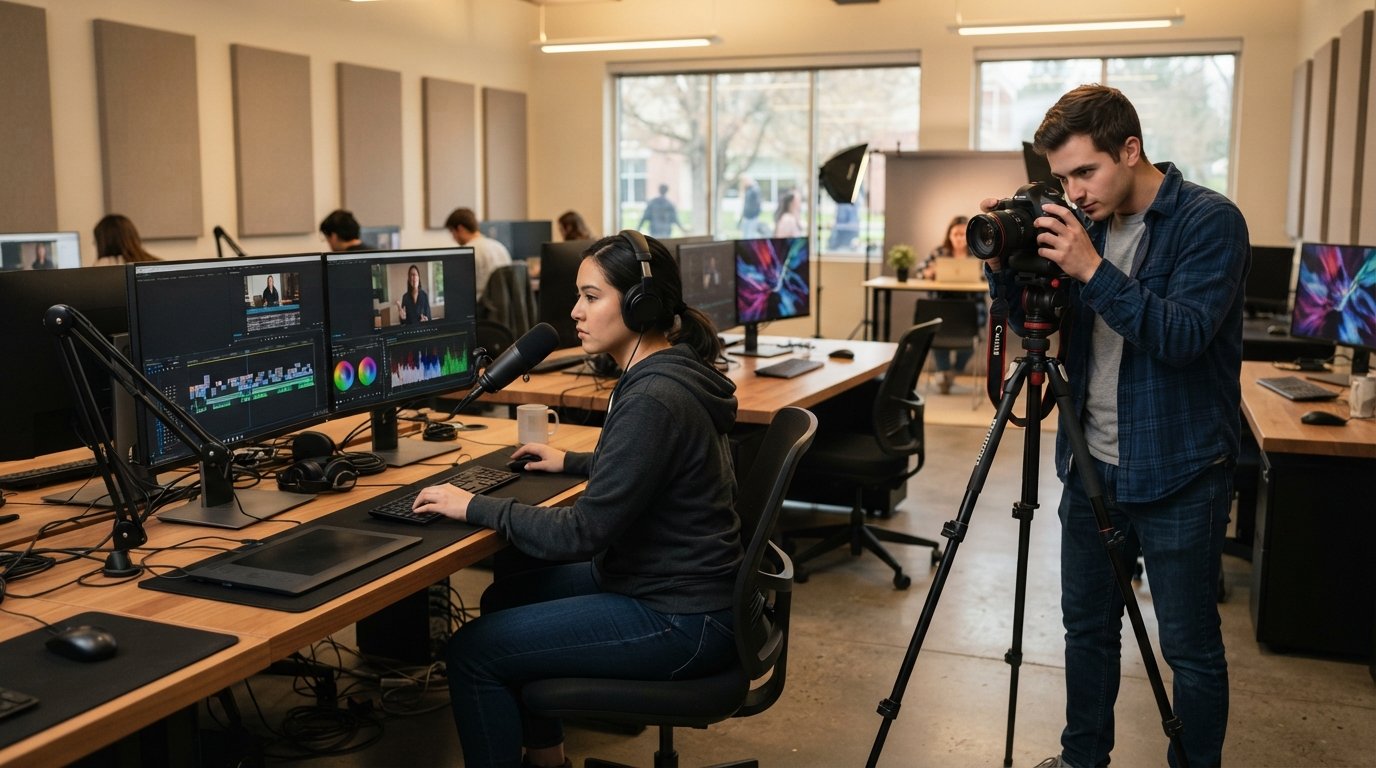
The Digital Communication and Media/Multimedia Certificate is a workforce-oriented credential, not a transfer track. Its purpose is to prepare you for immediate employment in roles that involve creating, editing, and distributing digital content. Coursework typically blends writing for digital platforms, audio and video production, graphic design fundamentals, and social media strategy. Because the program is delivered in person, you get hands-on access to cameras, editing suites, and audio equipment that online-only programs often cannot replicate.
The curriculum is built around a simple idea: modern media professionals need to be versatile. A single project might require you to script a short video, shoot it, edit it, write a companion social post, and design a thumbnail. The certificate structures your learning so that each course reinforces the others. By the end of the program, you have a portfolio of finished work rather than just a transcript.
Core skill areas usually include:
- Digital writing and storytelling for web, email, and social platforms
- Video production, from pre-production planning to final edit
- Audio recording and post-production for podcasts and multimedia
- Graphic design basics, including layout and visual hierarchy
- Social media management and audience engagement
Each of these areas maps to real job functions. Digital writing supports content marketing and communications roles. Video and audio production skills apply to corporate media teams, local broadcast, and freelance work. Design fundamentals help you produce polished deliverables without relying on a separate designer. Social media management ties everything together for organizations that need one person to handle multiple channels.
Because the program runs 12 weeks to less than 1 year, you can complete it within a single semester or stretch it across a few terms depending on scheduling. That flexibility matters for students who work part time or have family obligations. The in-person format also means you build relationships with classmates and instructors, which often leads to referrals and collaboration opportunities after graduation.
Who Should Enroll in This In-Person Certificate at Alvin Community College
This certificate is not limited to one type of student. Its short duration and practical focus make it attractive to several groups. Career changers who want to move into media, marketing, or communications without committing to a two-year or four-year degree are a natural fit. Recent high school graduates who want to test the field before pursuing a broader degree also benefit. Working adults already in marketing, communications, or administrative roles can use the certificate to formalize skills they have picked up on the job.
Small business owners and freelancers represent another audience. If you run a business or work independently, the ability to produce your own video, audio, and graphics reduces your reliance on outside vendors. The certificate gives you enough technical grounding to create professional-looking content on your own.
Prospective students exploring broader education options can also use this program as a stepping stone. If you are considering a full degree later, the credits and portfolio you build here can strengthen an application or transfer pathway. Platforms that help students compare programs, such as TopStudents, can be useful for mapping out next steps if you decide to continue your education after the certificate.
It is worth noting what the program is not designed for. If your goal is a research-heavy career in media studies or a tenure-track academic path, a certificate is not the right primary credential. This program is applied, not theoretical. It is built for people who want to make things and get hired.
Duration, Format, and What 12 Weeks to Less Than 1 Year Really Means
The phrase 12 weeks to less than 1 year describes the range of completion times, not a fixed schedule. Some students take the minimum path, finishing in about one semester by enrolling in a full course load. Others spread the coursework over two or three terms to balance work and life. The exact timeline depends on course availability, your availability, and whether you need to retake or sequence any classes.
The in-person format is a defining feature. Unlike asynchronous online programs where you watch lectures on your own schedule, this certificate requires you to attend classes on campus. That structure creates accountability and immediate feedback. If your video edit is not working, you can ask an instructor in real time. If your audio levels are off, you can troubleshoot in the lab. This kind of direct interaction accelerates learning, especially for hands-on technical skills.
In-person attendance also builds professional habits. Showing up on time, meeting deadlines, and collaborating with peers mirror the expectations of media workplaces. Employers value these soft skills as much as technical ability, and the format naturally reinforces them.
For students in and around Brazoria County, the commute to Alvin is manageable. The college serves a wide area, and the campus environment provides access to resources like computer labs, media equipment, and library databases that support coursework. If you are comparing this program to online alternatives, the trade-off is clear: less scheduling flexibility in exchange for more hands-on training and networking.
Admission Steps and How to Get Started
Admission to a certificate program at a community college is typically less complex than applying to a four-year university. The process usually involves a few clear steps. Because requirements can change, always confirm details with the college directly, but here is the general sequence you can expect.
- Complete the college application for admission to Alvin Community College.
- Submit transcripts or documentation required for placement, such as high school records or prior college credit.
- Take any required placement tests or provide scores that satisfy readiness requirements.
- Meet with an advisor to confirm the certificate plan and course sequence.
- Register for classes and pay tuition or set up a payment plan.
Advising matters more than many students expect. A good advisor helps you sequence courses so you are not stuck waiting a semester for a required class. They can also flag prerequisites and suggest electives that align with your career goals. If you are unsure whether the certificate is the right fit, ask about visiting a class or speaking with an instructor.
Financial aid and payment options are available for eligible students. Community college tuition is generally lower than four-year institutions, but costs still add up. Ask about scholarships, grants, and payment plans early so you are not scrambling before the term begins. If you are also exploring other short-term credentials in different fields, resources like this guide to a pharmacy certificate at CLTCC show how varied the 12-week training landscape has become.
Career Outcomes and Job Roles After Completion
Graduates of digital communication and multimedia certificates pursue a range of entry-level and mid-level roles. The exact title depends on the employer and your prior experience, but common paths include content creator, social media coordinator, multimedia specialist, production assistant, and communications associate. Small and mid-sized organizations often hire one person to handle multiple media tasks, which is exactly what this certificate prepares you for.
Industries that hire these skills include marketing agencies, local news and broadcast outlets, corporate communications departments, nonprofit organizations, e-commerce companies, and educational institutions. Freelance and contract work is also common, especially for graduates who build a strong portfolio during the program. Video editing, podcast production, and social media management are all services that small businesses regularly outsource.
Salary expectations vary widely by role, location, and experience. Entry-level media and communications positions in the Houston area typically start in a moderate range, with room to grow as you specialize. The certificate alone will not guarantee a high salary, but it can get you into the field faster than a longer degree, allowing you to earn while you continue building skills.
One practical advantage of the in-person format is the feedback loop. Instructors who have worked in media can tell you which skills employers actually value and which portfolio pieces get attention. That kind of guidance is hard to replicate in a purely online program.
Cost Considerations and ROI for a Short Certificate
Cost is a major factor for adult learners. A certificate that takes 12 weeks to less than 1 year costs significantly less than a two-year or four-year degree. Tuition at community colleges is typically charged per credit hour, and the total for a certificate program is often a fraction of what you would pay at a university. Additional costs may include equipment, software, or materials, though many programs provide access to labs and loaner gear.
Return on investment depends on how you use the credential. If you complete the certificate and move into a full-time role within a few months, the math is straightforward. If you use it to freelance or to enhance an existing job, the value shows up as higher rates or expanded responsibilities. The key is to treat the program as a launchpad, not a finish line. Keep building your portfolio after graduation, and continue learning new tools as the industry evolves.
Prospective students should also consider opportunity cost. Spending 12 weeks to less than 1 year in school means time away from full-time work, though many students continue working while enrolled. The in-person schedule may require daytime availability, so check course times before committing. If the schedule conflicts with your job, ask about evening or part-time options.
How It Compares to Longer Degrees and Online Alternatives
A certificate is not a replacement for a degree, and it is not meant to be. It is a targeted credential for a specific set of skills. Compared to an associate or bachelor's degree, the certificate gets you into the workforce faster and at lower cost. Compared to online certificates, the in-person format offers more hands-on training and networking. The trade-off is flexibility.
If your goal is long-term career growth into management or specialized creative roles, you may eventually want a degree. But starting with a certificate can be a smart way to test the field, earn credentials, and build a portfolio before committing to more education. Many students stack certificates or transfer credits into a degree program later.
For students who need maximum scheduling flexibility, online programs may be a better fit. For students who learn best by doing and want direct access to equipment and instructors, the in-person option at Alvin Community College is worth serious consideration. The right choice depends on your goals, your schedule, and how you learn.
If you are still weighing options, take advantage of free comparison tools and advising services. The more information you gather before enrolling, the better your decision will be. A short certificate can be a powerful career move when it aligns with a clear plan.
Digital communication and media skills are not fading. They are becoming more embedded in every industry. A focused, in-person certificate that takes 12 weeks to less than 1 year gives you a practical way to enter that field without betting years of your life on a single path. If you are ready to create, edit, and publish real work, this program is built to help you start.