
Environmental Science Degree Career Paths and Online Options
Explore environmental science degree career paths and online options, from consulting to sustainability roles, plus how to compare flexible programs.

By Frank DeCicco
Environmental science sits at the intersection of biology, chemistry, geology, and social policy, which means graduates rarely follow a single, predictable route. Some head into regulatory agencies, others join consulting firms, and a growing number work remotely for nonprofits or research groups. What makes the field unusual is how quickly it has absorbed digital tools, from satellite mapping to remote sensor networks, creating roles that did not exist a generation ago. For students weighing whether to enroll, the real question is not whether the degree is useful, but which delivery format and career track match their life right now. That is where understanding environmental science degree career paths and online options becomes practical rather than abstract.
What an Environmental Science Degree Actually Prepares You For
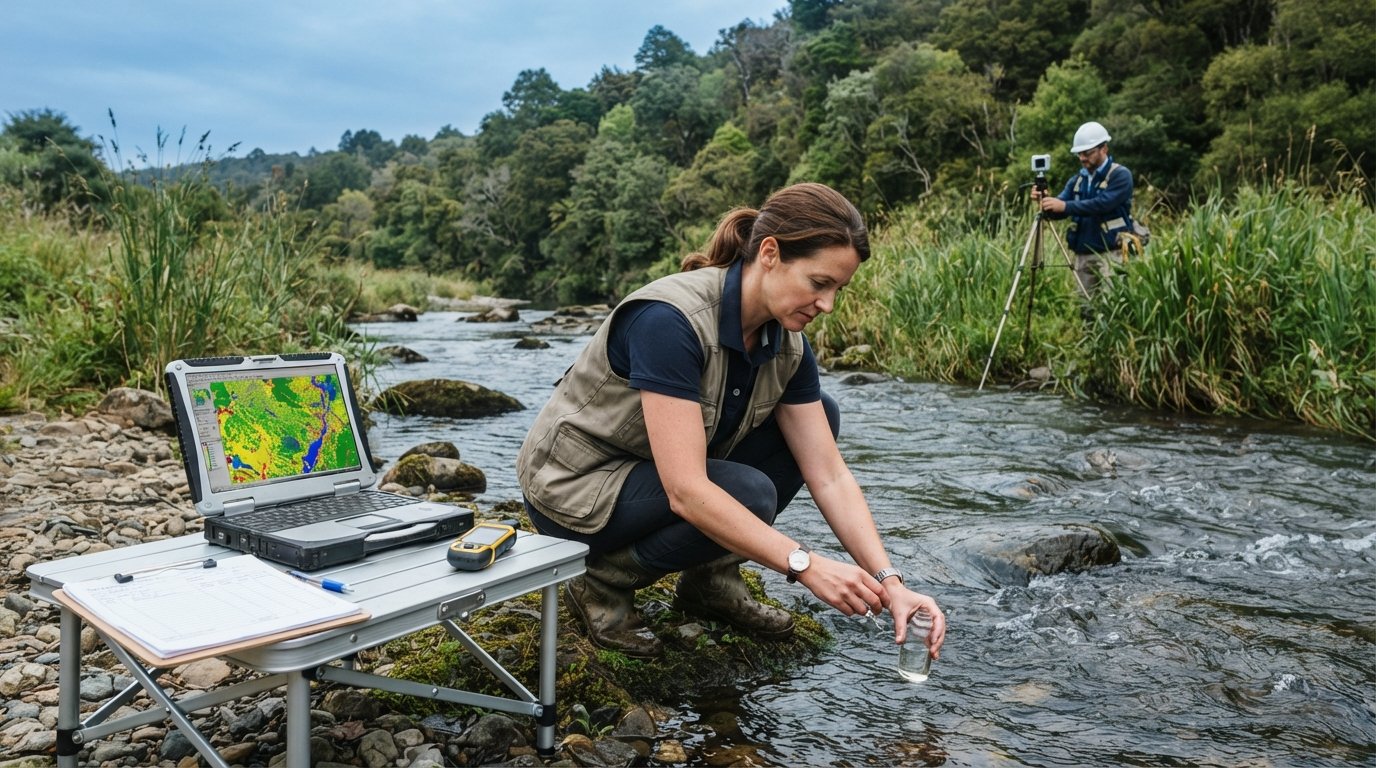
An environmental science program blends lab science with field work and policy analysis. Students typically take courses in ecology, environmental chemistry, hydrology, statistics, and geographic information systems (GIS). The interdisciplinary design is deliberate: employers want graduates who can read a water quality report, interpret a land-use map, and explain both to a city council. That combination opens doors in government, private industry, and the nonprofit sector.
What many prospective students overlook is how much the degree depends on data literacy. Modern environmental work involves sensors, drones, and modeling software. Programs that require a GIS course or a statistics sequence give graduates a tangible edge, because these skills transfer across industries even when the specific environmental focus changes. If you are still comparing degree formats, it helps to review how online programs structure their lab requirements, since hands-on components vary widely.
Core Career Paths After Graduation
The career map for environmental science graduates is broader than most people assume. It includes roles that are primarily office-based, roles that are almost entirely field-based, and hybrid positions that rotate between the two. The common thread is that each path rewards the ability to connect scientific findings to real decisions.
Here are five of the most common tracks, each with a distinct daily rhythm and typical entry point:
- Environmental consulting: Firms hire graduates to conduct site assessments, prepare permit applications, and manage remediation projects for clients in construction, energy, and manufacturing.
- Government regulation and planning: Agencies at the federal, state, and local level employ environmental specialists to monitor compliance, review impact statements, and manage public lands.
- Conservation and nonprofit work: Organizations focused on habitat restoration, wildlife protection, and climate education rely on program coordinators and field researchers.
- Corporate sustainability: Companies increasingly hire analysts to track emissions, reduce waste, and report progress against environmental targets.
- Research and academia: Universities, labs, and institutes offer research assistant and technician roles, often as a stepping stone to graduate study.
Each of these paths has its own credential expectations. Consulting and government roles often value internships and GIS certificates, while research positions may prioritize publications or advanced degrees. The important takeaway is that the same bachelor's degree can lead in several directions, and the choice of electives or minor can steer you toward one over another.
Salary Expectations and Growth Areas
Compensation varies by sector, region, and experience, but the U.S. Bureau of Labor Statistics groups many of these roles under environmental scientists and specialists, a category with median pay well above the national average for all occupations. Entry-level consulting and government positions tend to start modestly, then rise quickly once a graduate earns a professional certification or takes on project management duties.
Growth is strongest in areas tied to regulation, climate adaptation, and water resources. States facing drought or coastal flooding are hiring planners and hydrologists. Private firms that handle environmental impact statements are busy because new infrastructure projects require review. For students who want the strongest long-term outlook, combining environmental science with a minor in data analysis, public policy, or engineering creates a profile that is harder to replace.
It also helps to look at salary data for adjacent technical fields, because environmental work increasingly overlaps with them. For example, our breakdown of the highest paying jobs with a computer science degree in the UK shows how data and modeling skills lift earnings in environmental analytics roles as well. That crossover matters when you are choosing electives or considering a dual focus.
Online Degree Options and What to Check
Online environmental science degrees have matured significantly. Many regionally accredited universities now offer full bachelor's and master's programs with virtual labs, remote field projects, and hybrid residencies. This format suits working adults, career changers, and students in rural areas who cannot relocate for a traditional campus program.
Before enrolling, verify several details. First, confirm that the program is accredited by a recognized agency, since accreditation affects financial aid and some employer tuition benefits. Second, ask how lab and field requirements are handled: some schools use at-home kits, others partner with local facilities, and a few require short on-campus intensives. Third, check whether the degree appears on a transcript as identical to the campus version, because some employers still ask that question.
Cost is another variable. Online programs sometimes charge the same tuition regardless of residency, which can be an advantage for out-of-state students. They also often have asynchronous coursework, meaning you can complete assignments around a full-time job. That flexibility is the main reason enrollment in online science degrees continues to climb.
How to Compare Programs Without Wasting Time
The fastest way to narrow your options is to define three constraints before you start browsing: your budget ceiling, your weekly time availability, and your target career track. Once those are clear, you can filter programs by format, cost, and required fieldwork. A matching service can simplify this step because it lets you browse sponsored programs by subject or state and request information directly from schools, with no obligation to apply.
If you are exploring multiple schools at once, a college matching site such as TopStudents can help you compare online and on-campus degree programs in one place. The value is not in the recommendation itself, but in the ability to see program details, tuition ranges, and delivery formats side by side before you commit to applications.
When you evaluate each program, ask these questions:
- Does the curriculum include GIS, statistics, and at least one policy course?
- Are internships or field placements required, and does the school help arrange them?
- What percentage of graduates in this program find work in the field within a year?
- Are there faculty members whose research matches your interests?
Answers to those four questions will separate programs that simply offer a degree from programs that actually prepare you for the career paths described earlier. It is worth the extra hour of research.
Building a Career Strategy While You Study
The students who land the strongest positions rarely wait until graduation to start. They treat the degree as one part of a larger strategy that includes certifications, networking, and applied projects. A GIS certificate, for instance, can be earned alongside a bachelor's degree and often qualifies graduates for higher-paying analyst roles immediately.
Internships matter just as much. Environmental consulting firms and government agencies frequently hire their interns after graduation, which means a single summer placement can determine your first job. If your online program does not guarantee an internship, search for local nonprofits, watershed groups, or municipal offices that need volunteer research help. Those experiences become resume lines and references.
Networking in this field happens through professional associations, conferences, and local environmental committees. Joining a state or regional group as a student member is inexpensive and gives you access to job boards before positions are widely posted. The combination of a recognized degree, a technical certificate, and a professional network is what makes environmental science graduates competitive in a crowded market.
Making the Decision
An environmental science degree is not a guarantee of a specific job, but it is a flexible foundation for several growing fields. The career paths range from regulatory compliance to corporate sustainability, and the online options now make it possible to earn the credential without pausing your income. The key is to choose a program that includes quantitative training and fieldwork, then use internships and certifications to specialize. If you start with a clear target and verify the program details before enrolling, you can move from curiosity to a concrete plan in a matter of weeks.