
Heavy Equipment Maintenance Certificate at CPI: 12 Weeks
The Heavy Equipment Maintenance Technology/Technician Certificate, 12 weeks to less than 1 year In-person at Central Pennsylvania Institute of Science and Technology gets you job-ready fast.

By Frank DeCicco
Diesel engines, hydraulic systems, and undercarriages do not repair themselves, and the technicians who keep them running are in short supply across Pennsylvania and the wider United States. If you want to enter that workforce quickly, without spending four years in a classroom, the Heavy Equipment Maintenance Technology/Technician Certificate, 12 weeks to less than 1 year In-person at Central Pennsylvania Institute of Science and Technology offers one of the fastest structured routes from zero experience to employable skill. For students comparing short vocational pathways with broader options, resources like TopStudents helps students compare colleges, though this particular program stands out because it is hands-on, local, and completable in a single season or semester.
This article breaks down what the certificate covers, who it is designed for, how long it takes, what it costs in time and effort, and how to decide whether it fits your career plan. It also explains how heavy equipment maintenance differs from general automotive training, because that distinction matters when employers review your resume.
What the Heavy Equipment Maintenance Technology/Technician Certificate Covers
Heavy equipment maintenance is not simply "fixing trucks." It is a specialized trade focused on machines that move earth, lift loads, and grade surfaces: excavators, bulldozers, backhoes, wheel loaders, skid steers, cranes, and the diesel engines and hydraulic systems that power them. A certificate program condenses the core competencies of that trade into a short, intensive sequence so graduates can perform preventive maintenance, inspections, and basic repairs under supervision.
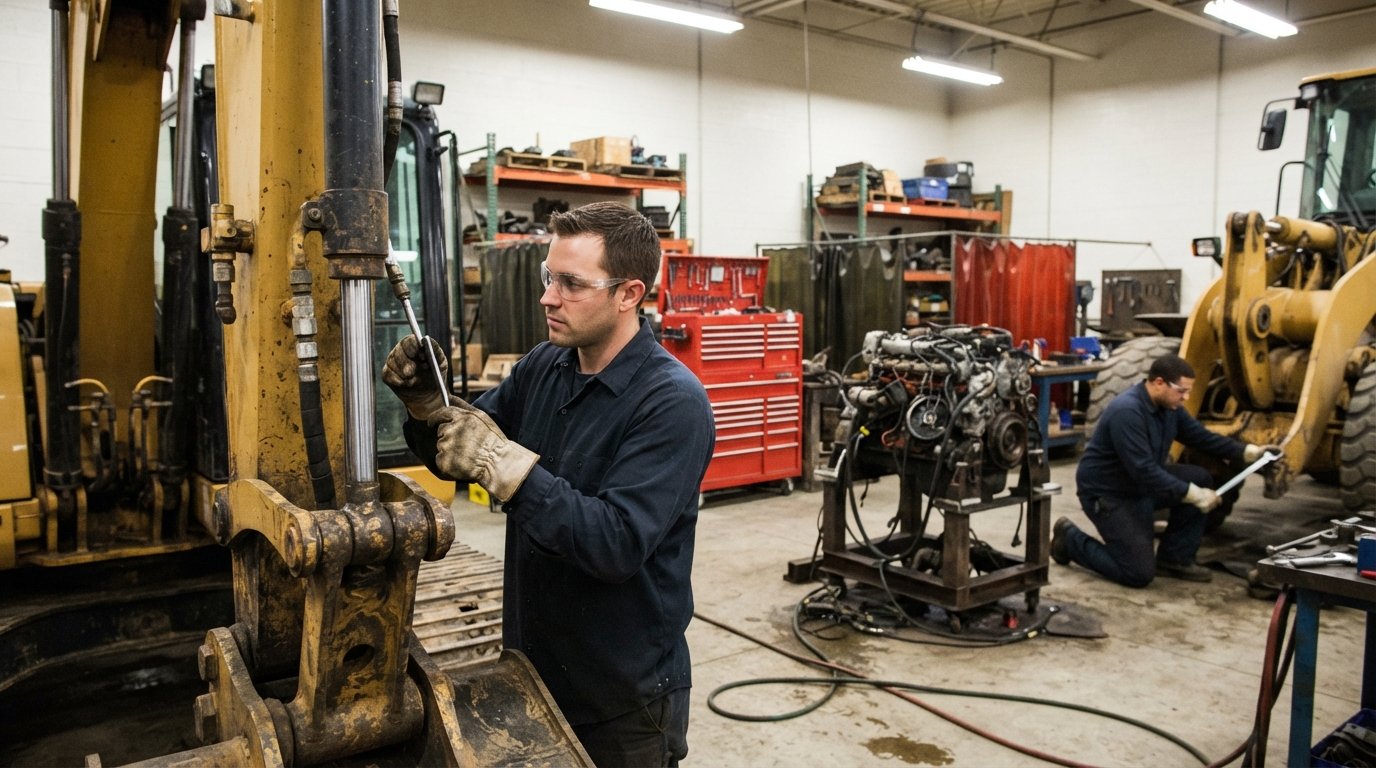
At Central Pennsylvania Institute of Science and Technology, the curriculum is delivered in person, which matters enormously in this field. You cannot learn to diagnose a hydraulic leak or torque a track assembly by watching a video. Students typically rotate through shop-based modules that blend classroom theory with live equipment. Core subject areas usually include diesel engine fundamentals, hydraulic and pneumatic systems, electrical and electronic controls, power train components, undercarriage inspection, and safety procedures aligned with industry standards.
Because the program runs between 12 weeks and less than 1 year depending on the schedule you choose, the pacing is deliberate. Expect full days, not casual evening classes. The payoff is that you build muscle memory fast: identifying worn seals, reading pressure gauges, interpreting fault codes, and documenting maintenance logs the way a job site foreman expects.
Who This Program Is Built For
The strongest candidates tend to share a few traits rather than a specific educational background. You do not need a prior degree, and many students enter with only a high school diploma or equivalent. What you do need is comfort with physical work, mechanical curiosity, and the discipline to show up on time every day, because attendance in a compressed program is unforgiving.
Three groups tend to benefit most from this certificate:
- Career changers leaving retail, warehouse, or food service jobs who want a trade with clear advancement.
- Recent high school graduates who want to start earning before committing to a two-year or four-year degree.
- Military veterans and reservists with mechanical exposure who want formal credentials for civilian employers.
If you already hold a commercial driver's license or have worked around construction sites, you will recognize much of the vocabulary immediately and can focus on the diagnostic depth. If you are starting from zero, the in-person format gives you instructors who can correct your technique in real time, which is exactly the support a beginner needs.
It is also worth noting that this certificate pairs well with other short allied programs. Students exploring the healthcare side of vocational training sometimes compare pathways like an ultrasound technician certificate fast track, which shows how many fields now offer compressed credentials designed for rapid entry.
Why the 12-Week to Under-1-Year Timeline Matters
Time is the hidden cost of education. Every additional semester is tuition, lost wages, and delayed experience. A program that finishes in 12 weeks to less than 1 year compresses that cost dramatically. You can complete training, build a starter tool set, and begin applying for entry-level technician roles within a single hiring cycle.
Employers in construction, mining, agriculture, and municipal public works frequently hire on demonstrated competence rather than degree level. A certificate signals that you have been exposed to the systems they operate and understand shop safety. Many graduates start as maintenance helpers, lube technicians, or field service assistants and move up as they accumulate hours.
Shorter programs also suit adults with existing obligations. If you are supporting a family or working part time, a 12-week intensive may be easier to finance and schedule than a two-year associate degree, even though the associate degree offers broader long-term mobility. The right choice depends on whether you need speed to employment or depth for advancement.
What You Will Actually Do in the Shop
Hands-on training is the defining feature of this certificate. A typical week might include morning classroom instruction on hydraulic schematics followed by afternoon work on a live machine, tracing fluid paths and identifying components. Instructors often use a mix of demonstration, guided practice, and independent troubleshooting.
Skills you can expect to develop include:
- Performing daily and periodic preventive maintenance inspections on heavy equipment.
- Diagnosing basic hydraulic, electrical, and diesel fuel system faults.
- Removing, inspecting, and reinstalling components such as pumps, cylinders, and filters.
- Reading and interpreting service manuals, schematics, and fault codes.
- Documenting work orders and communicating findings to supervisors.
These are the same tasks entry-level technicians perform on job sites, which is why employers value the credential. The sequence above also mirrors how work is assigned in the field: inspect first, diagnose second, repair third, document last.
Safety deserves special mention. Heavy equipment is dangerous when mishandled, and programs that operate in person can enforce lockout and tagout procedures, PPE requirements, and lift protocols in a way that online courses cannot replicate. That safety culture becomes part of your professional identity.
Admissions, Cost, and Practical Considerations
Admission requirements for vocational certificates are generally straightforward: a high school diploma or equivalent, basic math and reading competence, and the ability to meet the physical demands of the trade. Some programs require a placement assessment or an interview. Because this program is in person, you should also confirm the campus schedule, commuting distance, and whether tools and safety equipment are provided or must be purchased.
Financial planning is where many students need the most help. Certificate programs often qualify for federal financial aid, workforce development grants, and employer tuition assistance. Pennsylvania specifically has apprenticeship and industry partnership programs that can offset costs for eligible students. It is worth speaking with the school's financial aid office before assuming you cannot afford training.
When comparing programs, ask four questions:
- How many hours of hands-on lab time are included?
- What is the graduate placement rate in the field?
- Are instructors currently working in or recently retired from the industry?
- Does the program provide job placement assistance or employer introductions?
Answers to those questions separate a genuinely useful certificate from a generic one. Central Pennsylvania Institute of Science and Technology operates as a career and technical education provider, so its incentives align with getting students hired rather than keeping them enrolled indefinitely.
Career Outlook and Earnings Potential
Demand for heavy equipment technicians is tied to infrastructure spending, energy production, agriculture, and construction, all of which have persistent labor shortages. The Bureau of Labor Statistics projects steady openings for mobile heavy equipment mechanics, with many positions opening as experienced technicians retire. That demographic shift creates room for new entrants with formal training.
Entry-level pay varies by region and industry, but heavy equipment technicians generally earn more than general automotive technicians because the machines are larger, the stakes are higher, and the skill set is more specialized. Overtime is common in construction and mining, which accelerates early-career earnings. Certifications in specific brands or systems can further increase pay.
Long-term, technicians can move into field service roles, shop supervision, equipment sales, or independent ownership of a mobile repair business. The certificate is a starting point, not a ceiling. Many technicians continue earning manufacturer credentials while working, often with employer reimbursement.
How to Decide If This Path Fits You
Choose the Heavy Equipment Maintenance Technology/Technician Certificate, 12 weeks to less than 1 year In-person at Central Pennsylvania Institute of Science and Technology if you want to work with your hands, you value speed to employment over a traditional degree timeline, and you are willing to commit to an intensive in-person schedule. Avoid it if you need fully online flexibility or if you are not comfortable with physical labor and shop environments.
Before enrolling, visit the campus if possible. Watch a class in progress. Talk to current students about workload and job placement. Ask whether you can speak with recent graduates. Those conversations reveal more than any brochure.
It also helps to map your plan backward from your goal. If you want to be working within six months, a 12-week certificate gets you there. If you want to become a lead technician or open your own shop, you may eventually pursue an associate degree or manufacturer certifications after gaining field experience. Either way, starting with a focused certificate is a low-risk way to test the trade before making a larger commitment.
The skilled trades reward people who show up, learn continuously, and take pride in doing the job correctly. A short, in-person heavy equipment maintenance certificate is one of the most direct routes into that world, and for many students in central Pennsylvania, it is the fastest path from classroom to paycheck.