
Dickinson College Geology Bachelor's Degree: 4-Year Guide
Dickinson College's Geology/Earth Science bachelor's degree blends 4 years of in-person fieldwork and research, preparing students for careers in geoscience.

By Stacy Harper
Choosing a college major is one of the most consequential decisions a student can make, and for those drawn to the study of our planet, a Geology/Earth Science, General Bachelor's degree, usually 4 years In-person at Dickinson College stands out as a distinctive pathway. Dickinson College, located in Carlisle, Pennsylvania, has built a reputation for producing graduates who understand the complexities of Earth systems, environmental change, and natural resources. This article explores what makes this program unique, what students can expect from the curriculum, and how to determine whether this in-person, four-year experience aligns with your academic and career goals.
Why Dickinson College for Earth Science
Dickinson College is a private liberal arts institution with a strong commitment to sustainability and environmental stewardship. Its Department of Earth Sciences offers a Geology/Earth Science, General Bachelor's degree that typically takes four years to complete in person. The program is housed within a college that has been recognized for integrating environmental themes across disciplines, making it an attractive option for students who want to connect geological science with broader questions about climate, resources, and society.
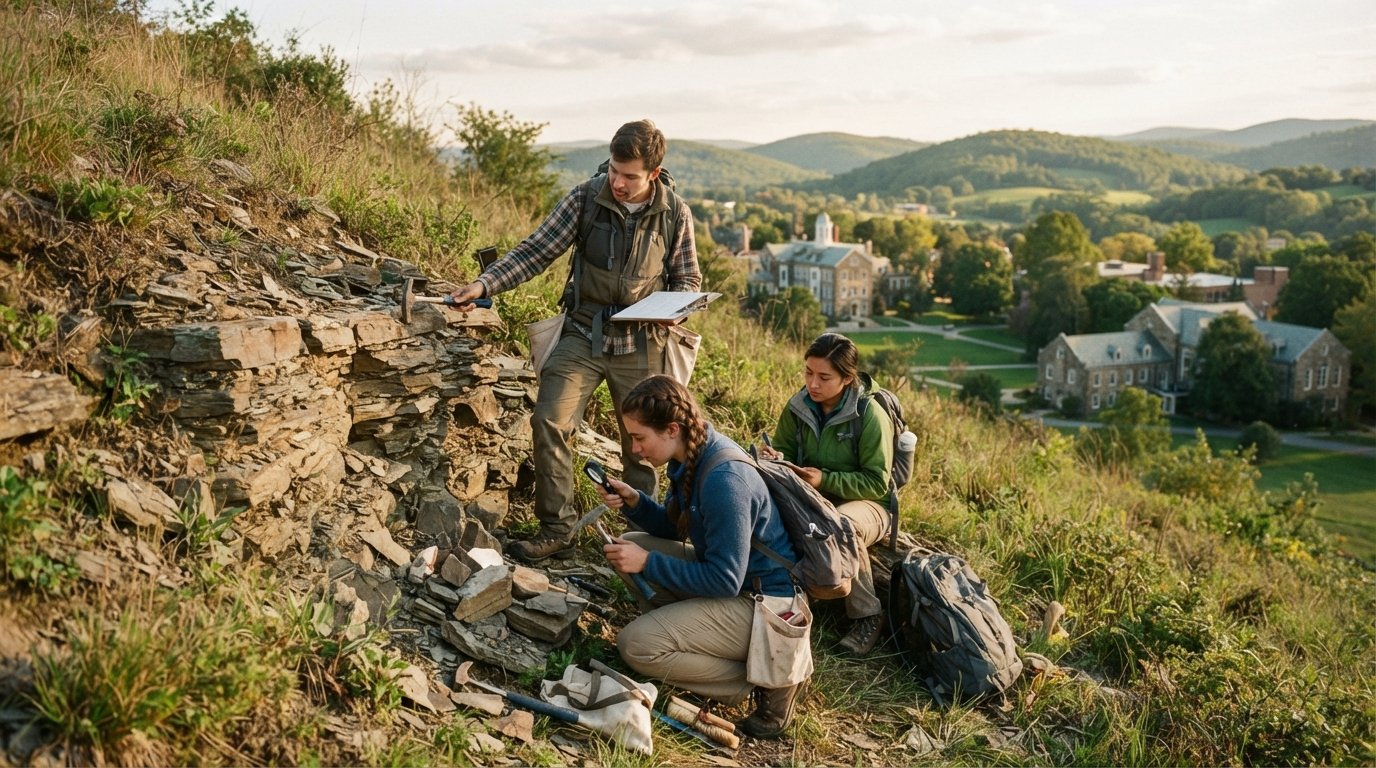
One of the distinguishing features of Dickinson's approach is its emphasis on field-based learning. Geology is fundamentally a field science, and the college takes this seriously. Students participate in numerous field trips, from local outcrops in the Cumberland Valley to extended excursions to regions with diverse geological features. This hands-on component is difficult to replicate in an online format, which is why the in-person requirement is essential for this particular degree. The faculty are active researchers who bring their expertise into the classroom, and class sizes remain small enough to allow meaningful interaction and mentorship.
For prospective students comparing options, it is worth noting that not all geology programs offer the same level of field experience. Dickinson's location in south-central Pennsylvania provides access to a variety of rock formations, from the folded sedimentary layers of the Ridge and Valley province to the igneous and metamorphic rocks of the Piedmont. This geological diversity serves as an extended laboratory for students throughout their four years.
Curriculum and Coursework Overview
The Geology/Earth Science, General Bachelor's degree at Dickinson College is structured to provide a solid foundation in the core principles of geology while allowing flexibility for students to explore related areas such as environmental science, chemistry, and biology. During the first two years, students typically complete introductory courses that cover topics like physical geology, historical geology, mineralogy, and petrology. These courses include laboratory components that reinforce theoretical concepts with practical observation and analysis.
As students progress, they encounter more advanced topics. The junior and senior years often include courses in structural geology, sedimentology, stratigraphy, geomorphology, and hydrogeology. Many students also choose to take courses in related departments, such as environmental studies or chemistry, to broaden their understanding of how geological processes interact with human activities and natural systems. A capstone experience, often a senior research project or thesis, allows students to delve deeply into a specific area of interest under the guidance of a faculty advisor.
To give a clearer picture of the typical course sequence, here is a sample of the required and elective courses that students might encounter:
- Physical Geology: Introduction to Earth materials, plate tectonics, and surface processes.
- Historical Geology: The history of Earth and life, including stratigraphy and paleontology.
- Mineralogy and Petrology: Study of minerals and rocks, their composition, and formation.
- Structural Geology: Analysis of rock deformation, faults, folds, and mountain building.
- Sedimentology and Stratigraphy: Examination of sedimentary processes and rock records.
- Hydrogeology: Groundwater flow, aquifer characteristics, and water resource management.
- Geomorphology: Landform development and the processes shaping Earth's surface.
Electives may include topics such as volcanology, geochemistry, geophysics, or environmental geology. Students are encouraged to work with their advisors to tailor their coursework to their career aspirations, whether they plan to pursue graduate study or enter the workforce directly after graduation.
For those who may be considering other four-year programs with a similar structure, our guide on a Music General Bachelor Degree at BGSU offers a useful comparison of how a different discipline approaches the four-year, in-person model. Understanding the nuances of various degree paths can help you make a more informed decision about your own educational journey.
Field Experiences and Research Opportunities
Fieldwork is not just a supplement to the geology curriculum at Dickinson College; it is a central component. Students in the Geology/Earth Science, General Bachelor's degree program participate in multiple field trips each semester, ranging from day-long excursions to week-long trips during breaks. These experiences allow students to apply classroom knowledge to real-world geological settings, develop observational skills, and learn the techniques of geological mapping and data collection.
In addition to course-related fieldwork, many students engage in independent research projects. Faculty members often involve undergraduates in their ongoing research, providing opportunities to work with sophisticated instruments and analytical methods. Students may present their findings at regional or national conferences, which can be valuable for building a professional network and enhancing graduate school applications. The college also offers summer research fellowships that support students who wish to pursue intensive research during the summer months.
The in-person nature of the program means that students have access to laboratories equipped with petrographic microscopes, rock preparation facilities, and computer software for geological modeling and analysis. These resources are integral to the learning experience and are not readily available to students in fully online programs. The collaborative environment of a small department fosters close working relationships among students and faculty, creating a supportive community of learners.
Career Paths and Outcomes
Graduates with a Geology/Earth Science, General Bachelor's degree from Dickinson College pursue a variety of career paths. Some enter the workforce directly in fields such as environmental consulting, natural resource management, or geological surveying. Others continue their education in graduate programs, earning master's or doctoral degrees in geology, hydrology, environmental science, or related fields. The strong liberal arts foundation, combined with rigorous scientific training, prepares students for diverse opportunities.
According to data from the U.S. Bureau of Labor Statistics, employment of geoscientists is projected to grow in the coming years, driven by demand for energy resources, environmental protection, and infrastructure development. Graduates may find work with government agencies, engineering firms, mining and energy companies, and nonprofit organizations focused on conservation. The skills developed in the program, including critical thinking, data analysis, and communication, are transferable to many other sectors as well.
For students who are exploring their options and want to connect with programs that match their interests, resources like TopStudents can help you browse and compare colleges and degree programs. Whether you are interested in geology, environmental science, or another field, taking the time to research and reach out to schools can lead to a more informed decision.
Admissions and Financial Considerations
Admission to Dickinson College is competitive, and prospective students should prepare a strong application that demonstrates academic achievement and a genuine interest in the Earth sciences. While specific admission requirements can vary, most successful applicants have completed a challenging high school curriculum that includes courses in mathematics, chemistry, physics, and biology. Letters of recommendation, a personal essay, and extracurricular activities that show a commitment to science or environmental issues can strengthen an application.
Financial aid is available through various sources, including need-based grants, merit scholarships, and federal student aid programs. Prospective students should complete the Free Application for Federal Student Aid (FAFSA) and explore institutional aid options. The college's financial aid office can provide guidance on deadlines and requirements. It is also worth noting that the four-year, in-person format means students should budget for tuition, fees, room and board, and other expenses associated with living on campus.
For students who are concerned about the cost of a private liberal arts education, it may be helpful to compare financial aid packages from multiple institutions. Some students find that generous aid packages make attendance possible, while others may consider in-state public options or online programs for certain majors. However, for a field-intensive discipline like geology, the in-person experience is often considered essential for developing the practical skills required for graduate study or professional practice.
Is This Program Right for You?
Deciding whether to pursue a Geology/Earth Science, General Bachelor's degree, usually 4 years In-person at Dickinson College comes down to a few key factors. First, consider your learning style. If you thrive in hands-on environments and enjoy spending time outdoors, the field-based approach of this program will likely appeal to you. Second, think about your career goals. If you aspire to work as a geologist, hydrologist, or environmental scientist, the strong foundation and research opportunities at Dickinson can help you get there. Third, evaluate the financial and personal commitment. Four years of in-person study requires a significant investment of time and resources, but the return can be substantial in terms of career preparation and personal growth.
It is also important to visit the campus if possible, meet with faculty, and talk to current students. These interactions can give you a sense of the culture and community that are difficult to gauge from a website or brochure. Dickinson College's emphasis on sustainability and global education means that geology students often have opportunities to study abroad or participate in interdisciplinary projects, adding another dimension to their education.
Ultimately, the Geology/Earth Science, General Bachelor's degree at Dickinson College offers a rigorous, immersive, and supportive environment for students who are passionate about understanding the Earth. Whether you are drawn to the intellectual challenge of deciphering geological history or the practical goal of solving environmental problems, this program provides the tools and experiences to help you succeed.