
Music General Bachelor Degree at BGSU: A 4-Year Path
Explore the flexible Music, General Bachelor's degree at BGSU, a 4-year in-person program that blends performance, theory, and career-ready skills.

By Frank DeCicco
Choosing the right university for a music degree is a decision that shapes not only your education but also your artistic identity and career trajectory. For students who are passionate about music but want a broad, versatile foundation rather than a narrow performance-only track, the Music, General Bachelor's degree, usually 4 years In-person at Bowling Green State University-Main Campus offers a compelling option. This program is designed for those who see music as both a craft and an academic discipline, blending rigorous training with the flexibility to explore various aspects of the field. In this comprehensive guide, we will examine the structure, benefits, and career outcomes of this degree, helping you determine if BGSU is the right place to nurture your talent.
Bowling Green State University, located in Ohio, has a long-standing reputation for excellence in the arts. The College of Musical Arts is accredited by the National Association of Schools of Music (NASM), which signals a commitment to high standards in curriculum and faculty. The Music, General Bachelor's degree is specifically tailored for students who want a holistic understanding of music, combining coursework in theory, history, and performance with opportunities to explore areas like music technology, world music, or even arts administration. Unlike more specialized programs that lock you into one career path early, this generalist approach allows you to sample different disciplines and discover where your true passions lie, making it an ideal choice for undecided but dedicated musicians.
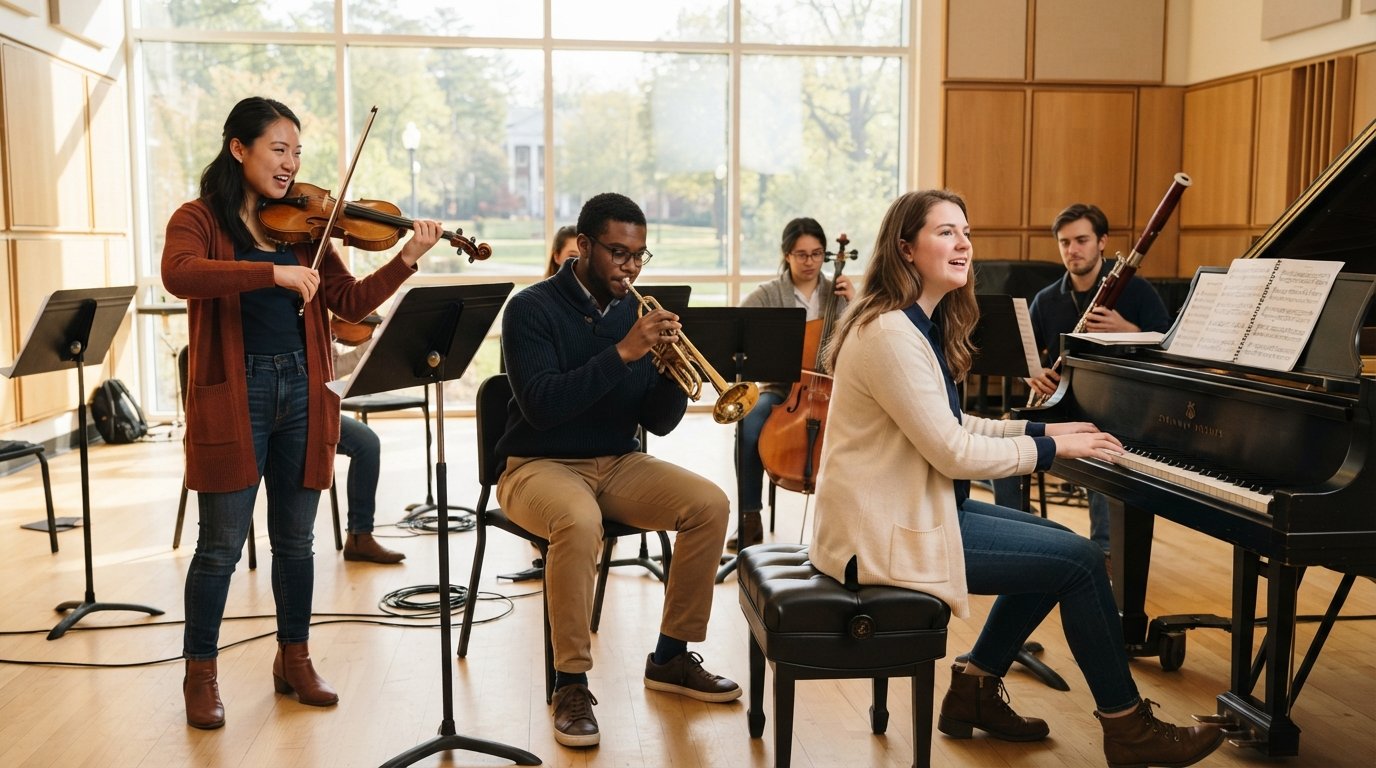
One of the most significant advantages of an in-person program at a campus like BGSU is the immersive environment. You are not just taking classes; you are living and breathing music. You will have access to practice rooms, rehearsal halls, and state-of-the-art recording studios. You will collaborate with fellow students in ensembles, attend guest lectures, and participate in masterclasses with visiting artists. This face-to-face interaction is invaluable for building a professional network and developing the soft skills, such as communication and teamwork, that are essential for a successful career in the music industry. For many students, the structured, on-campus experience is the catalyst for their artistic growth, providing daily inspiration and accountability that online or hybrid formats cannot fully replicate.
What Makes the BGSU Music, General Program Unique?
The Music, General Bachelor's degree at BGSU is not a one-size-fits-all program. It is intentionally flexible, allowing you to tailor your coursework to your specific interests and career goals. While the core curriculum ensures that every graduate has a solid grounding in essential skills, the elective requirements open doors to a world of possibilities. You might choose to focus on jazz studies, delve into the business side of music with courses in marketing and management, or explore the therapeutic potential of music. This adaptability is a key differentiator, making the degree relevant for a wide range of career paths, from teaching in private studios to working in the recording industry.
Another hallmark is the quality of the faculty. Professors in the College of Musical Arts are not just academics; they are active performers, composers, and scholars. They bring real-world experience into the classroom, offering insights that go beyond what you can find in a textbook. They also serve as mentors, guiding you through your academic journey and helping you make connections in the professional world. Small class sizes and a low student-to-faculty ratio ensure that you receive personalized attention, whether you are struggling with a complex music theory concept or seeking advice on how to prepare for a graduate school audition.
The facilities at BGSU are another major draw. The Moore Musical Arts Center is a hub of creative activity, featuring multiple performance halls, including the 750-seat Kobacker Hall and the more intimate Bryan Recital Hall. These venues host a packed calendar of concerts and recitals each year, giving you numerous opportunities to perform and to experience a wide range of repertoire. The center also houses a comprehensive music library, computer labs with digital audio workstations, and a music technology classroom, ensuring you have the tools needed to succeed in the 21st-century music landscape. When you compare these resources to those at other institutions, BGSU stands out as a place that invests heavily in its music students.
Core Curriculum and Learning Outcomes
While the program is flexible, it is built on a strong foundation of core requirements designed to develop well-rounded musicians. In your first two years, you will take a sequence of courses in music theory, aural skills, and music history. These courses are the building blocks of your musical education, helping you understand how music is constructed and how it has evolved over time. You will also be expected to take private lessons on your primary instrument or voice each semester, and you will participate in a major ensemble, such as the symphony orchestra, wind ensemble, choir, or jazz band. These performance opportunities are critical for developing your technique and stage presence.
As you progress into your junior and senior years, you will have greater freedom to choose electives that align with your interests. You might take courses in orchestration, counterpoint, music criticism, or ethnomusicology. You could also choose to complete a minor in a related field, such as communications, business, or theater, to broaden your skill set and enhance your employability. A capstone project or senior recital is typically required, allowing you to synthesize everything you have learned into a culminating artistic statement. This project is a significant undertaking, requiring you to plan, prepare, and present a full-length performance or an original composition, and it serves as a powerful addition to your portfolio.
The learning outcomes for the program are clear. By graduation, you will have demonstrated proficiency in your primary performance medium, a thorough understanding of music theory and history, and the ability to think critically about music and its role in society. You will also have honed your rehearsal and performance skills, learned how to give and receive constructive feedback, and developed the discipline needed to maintain a rigorous practice schedule. These outcomes are not just academic checkboxes; they are the core competencies that will enable you to adapt and thrive in whatever musical career you choose to pursue.
To give you a clearer picture of the depth of the program, here are some of the key areas you will study:
- Music Theory and Aural Skills: These courses train your ear and your mind to understand harmony, melody, rhythm, and form. You will learn to analyze scores, identify chord progressions by ear, and notate music accurately.
- Music History and Literature: From Gregorian chant to contemporary electronic music, you will survey the major periods, genres, and composers of the Western classical tradition and beyond, gaining a deep appreciation for music's cultural and historical context.
- Applied Music (Private Lessons): Weekly one-on-one instruction with a dedicated studio teacher focuses on developing your technical proficiency, musical expression, and repertoire on your chosen instrument or voice.
- Ensemble Participation: Whether in a large symphony orchestra or a small chamber group, playing with others teaches you listening skills, intonation, and the art of collaboration. You will learn how to interpret a conductor's cues and how to blend your sound with others.
- Conducting and Pedagogy: Introductory courses in these areas give you a taste of what it means to lead an ensemble or teach music to others, valuable skills for many music careers.
After these core experiences, you will have the opportunity to specialize further. The flexibility of the general track means you can take additional electives in areas such as music technology, recording techniques, or arts entrepreneurship, which are increasingly vital for today's musicians. You can also pursue independent study projects with faculty members, allowing you to dive deep into a niche topic that fascinates you. This combination of a strong core and the freedom to explore ensures that you graduate with both a comprehensive foundation and a unique area of expertise.
Admission Requirements and Audition Process
Gaining admission to the Music, General Bachelor's degree program at BGSU involves a two-step process. First, you must be admitted to the university itself through the Office of Admissions, which considers your high school GPA, standardized test scores (if submitted), and extracurricular activities. Second, you must successfully complete a music audition. This audition is a crucial part of the application process, as it allows the faculty to assess your current skill level and your potential for growth. The requirements vary depending on your instrument or voice, but you will typically be asked to perform 2 to 3 contrasting pieces from the standard repertoire.
It is highly recommended that you prepare your audition pieces well in advance, with the guidance of your current music teacher. The audition is not just a test of technical ability; it is also an opportunity to showcase your musicality and stage presence. You will be asked to play or sing for a panel of faculty members, and you may also have a brief interview or a sight-reading test. The faculty is looking for evidence of a solid technical foundation, a sense of rhythm and pitch, and a genuine passion for music. They want to see that you are teachable and that you have the drive to succeed in a demanding academic environment.
If you are unable to visit campus for an in-person audition, BGSU often offers options for submitting a recorded video audition. However, an in-person audition is always preferred, as it gives you the chance to meet the faculty, tour the facilities, and get a feel for the campus community. Regardless of the format, it is essential to present yourself professionally and to choose repertoire that highlights your strengths. After the auditions are complete, the faculty will score each candidate, and offers of admission are made on a rolling basis until all spots are filled. For the most current information on audition dates and requirements, it is best to check the BGSU College of Musical Arts website directly.
Career Paths and Opportunities After Graduation
A Music, General Bachelor's degree from BGSU opens doors to a wider array of careers than you might imagine. While some graduates go on to become professional performers or composers, many others find fulfilling work in music education, arts administration, and the music business. The versatility of the general degree is its greatest asset, allowing you to pivot as your interests evolve. Here are some of the most common career paths pursued by graduates:
- Private Music Instructor: Many graduates set up their own teaching studios, offering lessons in their primary instrument or voice to students of all ages. This can be a rewarding and flexible career, though it often requires entrepreneurial skills to build a client base.
- Music Director or Conductor: With further experience, some alumni lead church choirs, community orchestras, or youth ensembles. This role requires strong leadership and rehearsal skills, which you will develop in your ensemble experiences.
- Arts Administrator: Behind every successful music organization is a team of administrators who handle marketing, fundraising, and operations. A music degree combined with coursework in business or communications is excellent preparation for this behind-the-scenes work.
- Music Industry Professional: The recording industry, music publishing, and talent management all value individuals who have a deep understanding of music itself. Graduates may work for record labels, artist management firms, or music licensing companies.
- Graduate School: For those who wish to pursue further study, the BGSU bachelor's degree is an excellent stepping stone. Graduates have gone on to earn master's degrees in musicology, music theory, performance, and music education, leading to careers in university teaching or specialized research.
The skills you acquire in this program, such as critical thinking, discipline, and creative problem-solving, are highly transferable and sought after by employers in many fields. Your ability to work collaboratively in an ensemble, to present yourself confidently in a recital, and to manage your time effectively during intense practice and performance schedules are all assets that will serve you well, regardless of your specific career choice. Furthermore, the alumni network from BGSU's College of Musical Arts is active and supportive, providing valuable connections as you start your professional journey.
Financing Your Education and Scholarship Opportunities
Financing a college education is a major concern for most families, but there are numerous avenues for financial aid at BGSU. In addition to federal student loans and need-based grants, the university offers a variety of scholarships specifically for music majors. Many of these are awarded based on your audition performance, and they can range from a few thousand dollars to a full-tuition waiver. It is essential to meet all application deadlines and to complete the Free Application for Federal Student Aid (FAFSA) to be considered for the maximum amount of aid. The BGSU Office of Financial Aid is a valuable resource, and their counselors can help you navigate the process.
The Music, General Bachelor's degree, usually 4 years In-person at Bowling Green State University-Main Campus, represents a significant investment in your future, and it is one that can yield substantial returns. When weighing the costs, consider the comprehensive resources you will have access to, including world-class faculty, practice facilities, and performance opportunities. Many students offset the costs through work-study positions within the music school, such as working in the music library, helping with concert production, or providing administrative support. These positions not only provide income but also give you valuable behind-the-scenes experience. As you make your decision, it's wise to create a budget that accounts for tuition, fees, room and board, books, and personal expenses, and to explore all options to make your education affordable.
In addition to university scholarships, you should research external scholarships from organizations like the National Association for Music Education (NAfME) or your local arts council. For students considering a career in teaching, there are also loan forgiveness programs for those who commit to teaching in high-need areas after graduation. As you prepare your applications, pay close attention to the requirements for each scholarship, as they often ask for recommendation letters, essays, or additional recordings. Being proactive in your search can significantly reduce the financial burden of college, allowing you to focus on your studies and your music.
Is an In-Person Music Degree Right for You?
In an era of increasing online education, you might wonder why an in-person degree is still worth considering, especially for a field like music. The answer lies in the nature of the discipline. Music is fundamentally a human and communal activity. It requires real-time, physical interaction: the give-and-take of a rehearsal, the energy of a live performance, and the mentorship that occurs in a private lesson. While you can learn music theory from a recorded lecture, you cannot truly learn to play in an orchestra without sitting next to other musicians, responding to a conductor's gestures, and feeling the collective pulse of the ensemble. These experiences are irreplaceable and are central to the in-person BGSU program.
Furthermore, the networking opportunities afforded by an in-person program are immense. Your classmates will become your colleagues, and the relationships you build with faculty members can lead to letters of recommendation, gig opportunities, and introductions to industry professionals. Being on campus also allows you to attend guest lectures and masterclasses by world-renowned artists who visit BGSU throughout the year. These events are a source of inspiration and can sometimes lead to direct mentorship or even job offers. The structured environment of a campus program also helps many students stay focused and motivated, providing a daily rhythm that is harder to achieve when studying independently.
If you are still exploring your options and want to understand how to compare different programs, you may find it helpful to read our guide on advanced chemistry studies at Ball State University for a perspective on how another university structures a specialized degree. The key takeaway is to ask questions about curriculum, faculty, facilities, and outcomes. Ultimately, the decision to pursue a Music, General Bachelor's degree in-person at BGSU should align with your personal learning style and your professional aspirations. If you thrive on direct interaction, crave a vibrant artistic community, and are ready to dedicate yourself to daily practice and collaboration, this program could be the perfect launchpad for your career in music. To see how BGSU's offerings compare to other institutions and to explore the range of opportunities available, you can use a resource like TopStudents to research and compare programs that fit your criteria.
In conclusion, the journey through a music degree is demanding but deeply rewarding. It is a path that requires passion, discipline, and resilience. The Music, General Bachelor's degree program at Bowling Green State University-Main Campus offers a supportive and challenging environment where you can develop your talents to their fullest potential. Whether you dream of performing on a famous stage, teaching the next generation of musicians, or shaping the industry from behind the scenes, a solid educational foundation is the first step. By choosing BGSU, you are not just earning a degree; you are joining a community of artists and scholars who will support you long after you cross the graduation stage. Your musical journey starts here, and the possibilities are as vast and varied as music itself.